Ornamental · Papaveraceae
Oriental Poppy
Papaver orientale
Give it full sun and sharp drainage, and the oriental poppy fires off huge silken blooms every spring.
Full sun
Every 7–14 days
USDA 3–7
24–35 in · 60–90 cm
Overview
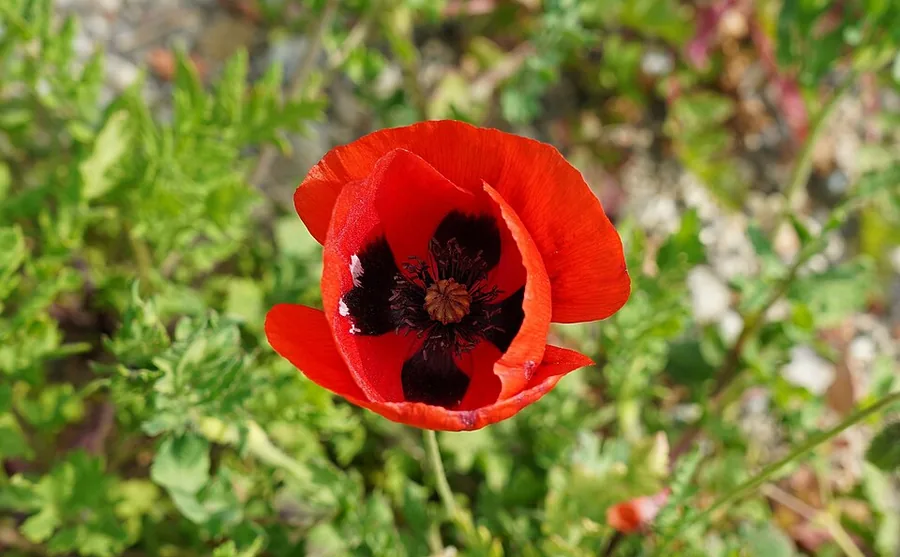
The oriental poppy earns its spot for one glorious reason: enormous, crepe-paper flowers in scarlet, orange, plum, and crimson that throw open in late spring. Each bloom holds for only a few days, but a clump hitting full stride is one of the boldest shows a garden can put on. It powers back from a deep, fleshy taproot year after year and laughs off winters as brutal as -40°F (-40°C).
One quirk is worth knowing before it goes in the ground. Once flowering wraps, the whole plant drops into summer dormancy, the leaves yellow and die back, and the spot goes quiet until fresh foliage charges back in fall. That gap is completely normal, never a problem, and it steers where the poppy goes and what gets planted around it.
Give poppies sun and drainage and they ask for almost nothing more. Once a clump digs in it powers through drought and would much rather be left alone than fussed over, especially at the watering can. Plant it right, back off, and watch it outlast most of the perennials around it.
Care
The short version: full sun and sharp, well-drained soil, watered only when the top half dries out. Feed lightly in spring, count on the plant to vanish in midsummer, and otherwise leave that deep taproot alone to do its thing.
Light
Hand an oriental poppy full sun and it flowers its heart out, though it will take a touch of partial shade. Pour on the direct light and the stems stand sturdier and the blooms come heavier.
Water
Let the top half of the soil dry out between drinks, which usually lands you at watering only every 7 to 14 days. Once it is established it powers through drought, and soggy ground is the fastest way to rot that taproot. Through summer dormancy it wants next to no water at all.
Soil
Plant it in well-drained loam or sandy soil, which counts for way more here than rich ground. It rolls with a wide pH band from 6.0 to 8.0, but it will never forgive a heavy, wet site.
Temperature
This is a genuinely cold-hardy perennial, cruising from -40°F to 86°F (-40°C to 30°C). That deep taproot rides out brutal winters with zero protection.
Humidity
Plain outdoor humidity suits it fine, so skip chasing a number. Good drainage and airflow do far more heavy lifting than any moisture in the air.
Feeding
One spring feed gets the job done, whether a balanced general-purpose fertilizer or a topdressing of compost. Once it drops into its summer rest, put the feeding away.
Pruning
Deadhead the spent blooms, then cut back the yellowing foliage once the plant slides into summer dormancy. Fresh basal leaves charge up in fall, so that cut-back clump is only resting, not gone.
Repotting
Oriental poppies hate being messed with and get rarely moved or divided. When flowering tapers off and the clump looks crowded and tired, that is your cue it has finally outgrown its spot.
Size & spacing
Plants rocket to 24 to 35 inches (60 to 90 cm) tall with a spread of 6 to 24 inches (15 to 60 cm). Give each clump plenty of elbow room up front, since it will not want to be lifted later.
When to plant
Oriental poppies run on a spring beat, and it is a fun one to chase. Get them in the ground in spring or fall, watch for the big blooms in late spring and early summer, then let them coast into dormancy through the heat of the year.
Northern hemisphere
Southern hemisphere
Typical months for a temperate climate: start earlier in warm zones, later where spring frosts linger.
- Sow: Late winter to early spring
- Plant: Spring or fall
- Harvest: Late spring to early summer
Hardiness
USDA hardiness zones: 3–7
Temperature: down to -40°C
Troubleshooting
Oriental poppies are tough as nails, so trouble is rare and almost always traces to one of two things: soil that stays too wet, or the natural midsummer dieback that trips up first-time growers. Match what you spot below before you jump to a fix.
Wilting plant with a blackened crown and collapse
A wilting plant with a blackened crown that keels over spells root rot, and wet soil is nearly always behind it. Dig in near the fleshy taproot and the roots come up soft, dark, and reeking. Move fast: dial the watering way down, work sand or grit through the bed to get it draining, and haul the plant up to a raised, drier spot if the ground refuses to dry out.
Fix:
- Improve drainage by amending soil with sand or grit
- Reduce watering and avoid wet sites
- Move or replant in a raised, well-drained location
Foliage yellows and dies back, leaving a midsummer gap
No need to sweat this one, because it is summer dormancy and not a disease, and it rolls around every year once the flowers wrap up. The leaves fade, the clump vanishes, and then fresh basal foliage bursts back up in fall. Snip off the tired leaves and slot a later-rising partner like baby's breath or Boltonia right alongside, and that border keeps right on performing.
Fix:
- Cut away withered foliage
- Interplant with later-developing perennials to fill the void
Toxicity
One straight-up warning before the fun: this plant is poisonous from top to bottom. Every part packs isoquinoline alkaloids into its milky sap, and chewing the leaves, stems, or pods can sedate and sicken pets, livestock, and people alike. Keep cats, dogs, horses, and grazing animals away from it, keep kids clear of the blooms and seed pods, and wash your hands after cutting stems.
Toxic to
Cats · Dogs · Horses · Rabbits · Livestock · Birds · People
Cats Toxic
A cat that chews the leaves or sap can turn drowsy and unsteady on its feet, go off its food, and end up queasy. A really big mouthful can drop it into a deep, hard-to-rouse sleep, so keep this one well out of a cat's reach.
Dogs Toxic
Keep an eye on a dog for sedation, a wobbly walk, drooling, and a snubbed dinner. The sap alkaloids hit the nervous system hard, so a big mouthful can leave a dog dangerously sluggish.
Horses Toxic
A horse that gets into the foliage or trimmings tends to turn quiet and drowsy with a churning gut. Keep poppy out of reach and nowhere near the grazing.
Rabbits Toxic
Those same alkaloids run through every part, so nothing here is safe for a rabbit. Block the leaves from nibblers and keep clippings clear of the hutch.
Livestock Toxic
Cattle, sheep, and goats can be sedated and sickened by the foliage, so fence them off from any planting. Never fling trimmings into a pasture either.
Birds Caution
The toxic alkaloids run through the whole plant, so treat it as strictly off-limits for pet birds and hand them none of it.
People Caution
No part of an oriental poppy is food, and eating it can make a person ill. Keep kids clear of the showy blooms and seed pods, and wash your hands after handling the milky sap.
Keep cut stems and plant trimmings away from pets and grazing animals; wash hands after handling the milky sap.
Helpline numbers

United States
ASPCA Animal Poison Control: (888) 426-4435 (fee applies)
Poison Control: (800) 222-1222



Canada
Poison Centres: 1-844-764-7669
Varieties
Most oriental poppies out there are named cultivars picked for flower color and height, and choosing one is half the fun. These are the ones you will run into most.
Beauty of Livermere
One of the tall standouts at 2 to 3 feet, it fires off deep crimson-red flowers and self-seeds readily, so you can raise it from seed too.
Patty's Plum
This one turns heads with dusky plum-mauve flowers riding stems around 2 to 2.5 feet tall.
Allegro
A compact firecracker at 1 to 1.5 feet, its bright orange-scarlet flowers pop at the front of a border.
Turkenlouis
It flaunts fringed, feathered scarlet-orange petals on stems 2 to 3 feet tall.
Companions
Plant near
Baby's breath (Gypsophila paniculata): Its sprawling form expands later in summer to fill the gap left when poppy foliage dies back.
Boltonia (Boltonia asteroides): Flowers in late summer and early fall, masking the void left by the dormant poppy.
How to propagate
Want more oriental poppies? Split an established clump or start fresh from seed, and while neither one pays off overnight, both are well worth the effort.
DivisionModerate
Fall, about four to six weeks before the ground freezes · 4 to 6 weeks to root before freeze; full establishment the following season
Grab a spade and split the fleshy roots in fall, four to six weeks before the ground freezes, so every piece gets time to root in before winter clamps down. The divisions dig in that season and then really let loose with flowers the following year, so the wait pays off big.
SeedModerate
Late winter to early spring, or sow outdoors in fall · One to two seasons to reach flowering size
Sow in late winter to early spring, or scatter seed outdoors in fall, and press it onto the surface instead of burying it, since poppy seed needs light to fire up. Stay patient, because a seedling takes one to two seasons to reach flowering size, and happy cultivars will self-seed and spread themselves around.
Myths
Oriental poppies are the opium poppy and are illegal to grow.
Not so, because opium comes from Papaver somniferum, a completely different species. Papaver orientale is an ordinary ornamental perennial, grown in gardens for generations, and it is not the opium poppy, so plant it and enjoy it.