Ornamental · Papaveraceae
Corn Poppy
Papaver rhoeas
Scatter the seed where you want it, hand it full sun and quick-draining soil, and watch silky scarlet poppies take off.
Full sun
Every 5–10 days
30–75°F · -1–24°C
60–90 days
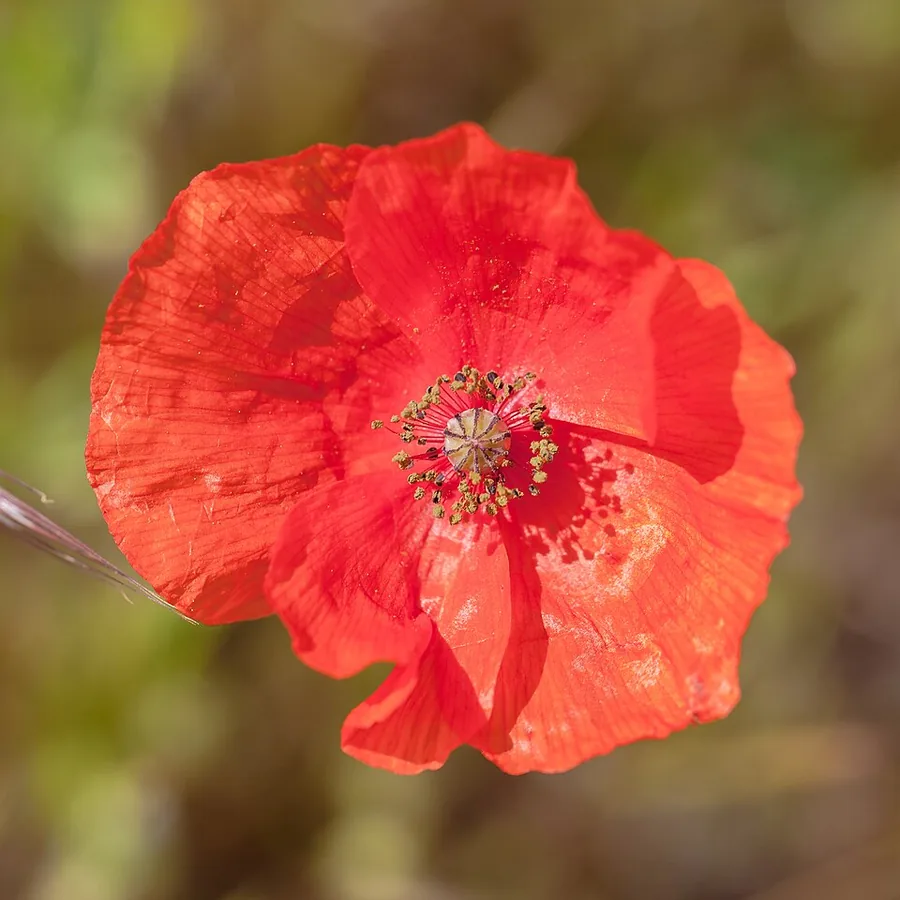
Overview
Few annuals reward a gardener as fast as the corn poppy. It races from seed to those papery scarlet flowers, the very ones that famously reddened the fields of Flanders, and it grows wild across Europe wherever the soil gets turned. It keeps a tidy footprint too, topping out at 9 to 18 inches (23 to 46 cm), so it earns its spot in even a small, sunny plot.
Watch it work and the appeal is obvious. Slim, hairy stems shoot up and pop open single, cupped blooms that blaze for a day or two before fresh ones take their turn, keeping the color rolling from late spring into mid-summer. Then it switches to making papery pods and bows out. It runs its whole life in one season, but it flings so much seed that new plants tend to charge right back the next year.
For all that energy, the corn poppy plays by a few simple rules. Hand it full sun, a cool start, and soil that drains, and it takes off. The one thing to nail is placement, because it flatly refuses to be moved. Sow it exactly where it will bloom and let it rip from there.
Care
The short version: full sun, light steady moisture, and fast drainage, sown straight into cool ground and left put, since it will not take being transplanted.
Light
Pour on the full sun and this poppy flowers hardest and longest. It will take a little afternoon shade where summers scorch, but deep shade drags it down into weak, floppy stems with barely a bloom to show.
Water
Keep it lightly and evenly moist, letting the top half of the soil dry out before the next drink, which usually lands around every 5 to 10 days. It bucks at both extremes, so a long drought thins it out while soggy ground rots the roots, above all over winter.
Soil
Set it into well-drained loam with a shot of compost, though plain garden soil works fine as long as water runs right through. It thrives across a pH of 6.0 to 7.5. Chase drainage over richness every time, and the roots stay happy.
Temperature
This one runs on cool weather, cruising between 30°F to 75°F (-1°C to 24°C). It sprouts and grows best through the cool of spring or fall, and once summer heat really cranks up, the flowers wrap up in a hurry.
Humidity
Dry air is right in its wheelhouse, and there is no number to hit. Moving air is the real win, since damp, crowded foliage rolls out the welcome mat for mildew and gray mold.
Feeding
Barely feed it and it thrives. A light hit of balanced fertilizer or compost at planting carries it through, and rich soil needs even less. Overdo it and you get a rush of leaf and a shortage of flower, which defeats the whole point.
Pruning
Deadhead the spent flowers and it keeps cranking out new ones far longer. Pull the seed pods before they ripen too, unless a wave of volunteer seedlings next year sounds like a win, which for many gardeners it does.
Repotting
Skip repotting entirely and enjoy the free time. Corn poppy is sown in place and left to run, since it resents root disturbance and never settles into a long-term container.
Size & spacing
It stays compact at 9 to 18 inches (23 to 46 cm) tall. Thin or set the plants around 6 to 12 inches (15 to 30 cm) apart so air rips right through and the leaves dry fast.
When to plant
Nail the timing and this poppy practically grows itself. Sow in late fall where winters stay mild, or jump on it in early spring further north. Flowers come charging in from late spring into mid-summer, roughly 60 to 90 days after the seed goes down, so the payoff arrives fast.
Northern hemisphere
Southern hemisphere
Typical months for a temperate climate: start earlier in warm zones, later where spring frosts linger.
- Sow: Not recommended; seedlings resent transplanting. Sow seed directly in place.
- Plant: Direct-sow in late fall in mild/southern regions or early spring in northern regions; seed needs light, cover no more than 1/8 inch.
- Harvest: Late spring to mid-summer (June to August)
Hardiness
USDA hardiness zones: 3–10
Temperature: down to -40°C
Troubleshooting
Poppies rarely throw a curveball, and when they do it almost always comes back to wet soil or stagnant air. Spot it early and you can turn it around fast, usually with sharper drainage or more room to breathe. Track down your symptom below and jump on it.
Yellowing plants toppling over on rotted roots
Plants going yellow and keeling over almost always mean root rot, and it starts with soil that stays soaked, usually over winter or from too much watering. Dig at the base and you will hit soft, brown roots stuck in ground that never dries. Move fast: sharpen the drainage, cut the extra water, and yank the worst plants before the rot marches on.
Fix:
- Improve drainage and stop supplemental watering
- Remove and discard severely affected plants
- Avoid replanting poppies in the same poorly drained spot
Gray fuzzy mold overtaking flowers and leaves
Cool, damp, crowded conditions roll out the welcome mat for botrytis, the gray mold that grabs fading blooms and leaves and rots them fast. During wet spells, hunt for that grayish fuzz on the dying parts. Snip out what is hit, spread the plants apart, and keep water off the leaves to shut it down.
Fix:
- Remove and destroy affected plant parts
- Increase air circulation through spacing and thinning
- Avoid overhead watering
A powdery white film creeping across the leaves
A chalky white film spreading over the top of the leaves is powdery mildew, which thrives in humid, still air. Swipe a patch and part of it lifts right off, giving it away. Open the planting up, strip the worst leaves, and stop the crowding so the air can move.
Fix:
- Improve air circulation
- Remove heavily infected foliage
- Avoid overcrowding plantings
Volunteer seedlings springing up all over
Corn poppy is a powerhouse self-seeder, and its ripe pods hurl seed way past the original patch. Expect a rush of unplanted seedlings crowding in near last season's flowers. To keep a lid on it, clip the pods before they ripen and pull the volunteers you do not want.
Fix:
- Remove seed pods before they mature and shed seed
- Pull unwanted volunteer seedlings
Toxicity
Here is the one thing to stay sharp on. Every part of the corn poppy is charged with a milky latex carrying opium-type alkaloids, which make the growing plant toxic to cats, dogs, horses, and other animals, and off-limits as food for people. The dried baking seeds are perfectly safe, but keep pets and kids clear of the sap, stems, and green pods.
Toxic to
Cats · Dogs · Horses · Rabbits · Livestock · Birds · People
Cats Toxic
A cat that gets into the sap or pods can wind up drowsy and unsteady, often drooling and turning away from food, all down to the opium-type alkaloids. A big helping can slow the breathing and drop it into deep sedation, so keep it well out of a cat's way.
Dogs Toxic
A dog that gnaws the foliage or pods may start drooling, skip its meals, and grow sleepy and wobbly. The bigger the dose, the harder it leans on the nervous system, and it can dull the breathing.
Horses Toxic
A horse that grazes on poppy can turn sluggish and clumsy, with a colic-like ache in the gut. Those narcotic alkaloids hit the nervous system, so shut down even a curious mouthful.
Rabbits Toxic
The opium-type alkaloids that hit cats and dogs are every bit as risky for a rabbit, and its tiny frame leaves next to no margin. Keep the plant, the sap, and the pods well out of a rabbit's reach.
Livestock Toxic
Cattle, sheep, and goats can end up sedated and staggering after grazing on poppy, drooling with a slowed gut and breathing. Most stock skip the bitter foliage, but the hungry or unfamiliar ones are the ones to keep an eye on.
Birds Toxic
The narcotic latex and alkaloids charge through every green part, so pet birds and poultry should not peck at it. Clear cut stems and dropped pods well away from cages and runs.
People Caution
The milky latex in the stems and green pods carries opium-type alkaloids that can bring on drowsiness and stomach upset, so the fresh plant is not for eating. The dried baking seeds are perfectly safe, but keep kids away from the sap and green seed heads.
All parts contain a white to yellowish latex and alkaloids; keep cut stems, seed pods, and plant debris away from pets.
Helpline numbers

United States
ASPCA Animal Poison Control: (888) 426-4435 (fee applies)
Poison Control: (800) 222-1222



Canada
Poison Centres: 1-844-764-7669
Varieties
The wild red is just the start, and that is where it gets fun. A few named strains push the color range wide open, and these three lead the pack on seed racks.
Shirley Series
A knockout seed strain that fires off single and double flowers in red, pink, white, and picotee, and skips the dark basal blotch of the wild poppy.
American Legion
Blazing scarlet-red single flowers, the standout pick for remembrance plantings.
Falling in Love
A playful bicolor and pastel mix of semi-double to double blooms in pink, salmon, and white.
How to propagate
It grows one way, and it could not be easier: drop the seed right where the flowers should stand, because the seedlings simply will not be moved.
SeedEasy
Direct-sow in late fall in mild/southern climates or early spring in northern climates · Germinates in about 7 to 28 days depending on soil temperature; blooms the same season
Corn poppy takes off from seed sown straight into the ground, because the seedlings resent transplanting and rarely survive the move. Sow in late fall where winters stay mild or in early spring further north. The seed needs light to fire up, so press it onto the surface and barely cover it, no more than 1/8 inch of soil, then keep it moist. Sprouts push through in roughly 7 to 28 days depending on soil warmth, and the plants flower that same season.
Myths
Corn poppy is the same opium poppy that narcotics come from.
Not even close. Corn poppy is Papaver rhoeas, a whole separate species from the opium poppy, Papaver somniferum. It packs isoquinoline alkaloids such as rhoeadine instead of the heavy morphine its relative carries. Same family, sure, but a different plant entirely.
Poppies must be pet-safe because they are everyday garden flowers.
Common in the garden proves nothing about safety. Poppy is toxic to cats and dogs, and those opium-type alkaloids can leave a pet drooling, groggy, and unsteady after a single bite.