Ornamental · Papaveraceae
Bloodroot
Sanguinaria canadensis
A fleeting white spring ephemeral for the shade, with a red rhizome you handle in gloves.
Partial shade
Every 3–7 days
USDA 3–8
6–10 in · 15–25 cm
Overview
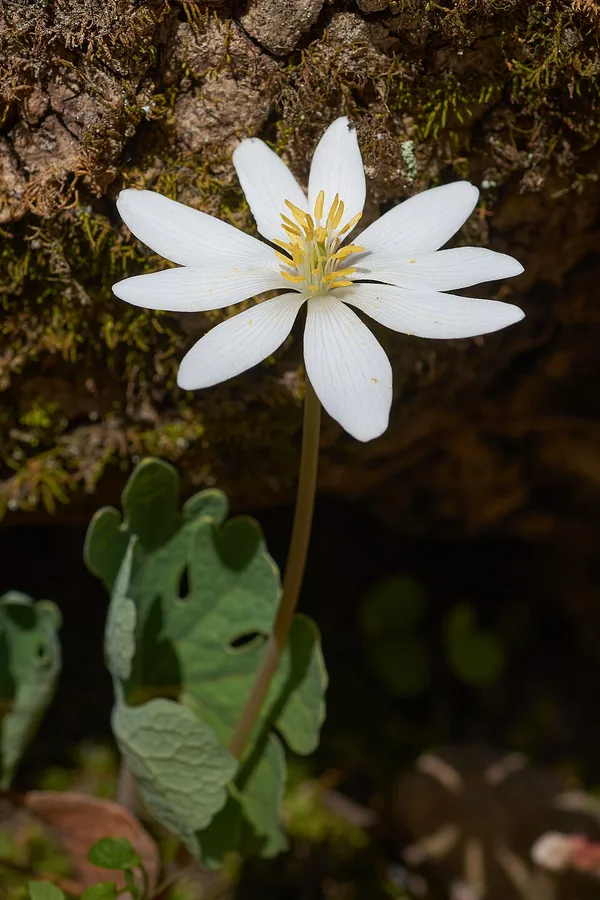
Bloodroot leads the charge among the first wildflowers of the eastern woodland spring. A single curled leaf pushes up wrapped tight around the flower bud, then unrolls to lift a clean white bloom with a gold center above the leaf litter. The flower holds for only a few days, and that brevity is half its appeal.
The name traces back to the red-orange sap that wells up from the rhizome the instant you cut it. That same sap carries sanguinarine and its related alkaloids, so this is a plant to enjoy with your eyes and handle with respect. Native peoples once worked it as a dye, and the color still stains skin and tools on contact.
Hand it the conditions of a forest floor and it asks for next to nothing. It grows slow but steady, knitting into a low colony over the years, then disappearing underground by midsummer to ride out the heat. Pair it with ferns and it never leaves a bare patch behind.
Care
The short version: plant it in part to full shade in rich, moist, humusy woodland soil, keep the ground evenly moist through spring, then let it slip into dormancy and dry out in summer without disturbing the rhizome.
Light
Bloodroot belongs in part to full shade, the dappled light of a deciduous woodland. It will take a little spring sun before the trees leaf out, but a hot, exposed spot dries the soil and cuts the show short.
Water
Keep the soil evenly moist through the spring growing season, watering every few days when things turn dry. Once the plant drops into dormancy in summer it shrugs off dryness, so you can ease off entirely after the leaves fade.
Soil
Plant it in moist, humusy, well-drained soil packed with organic matter, the kind that gathers under fallen leaves. A pH between 6.8 and 7.2 suits it, close to neutral, and a yearly topping of leaf mold keeps it cruising.
Temperature
Bloodroot is cold-hardy and content from about 23°F to 75°F (-5°C to 24°C), covering USDA zones 3 through 8. It welcomes a real winter chill, which it needs to flower well.
Humidity
Average outdoor humidity does the job, so there is no figure to manage. Steady soil moisture in spring counts for far more here than anything in the air.
Feeding
It feeds itself in good woodland soil and rarely begs for more. A light spring topdressing of leaf mold or compost is all it wants, with a balanced organic fertilizer only if the ground runs thin.
Pruning
There is nothing to prune. Let the foliage yellow and die back on its own as the plant drops into dormancy, and lay down a thin blanket of deciduous leaf mulch over winter to feed the soil.
Repotting
Bloodroot is rarely repotted and resents disturbance. In a container, watch for fading vigor or crowded rhizomes shouldering up to the surface, and only then lift and divide it in fall or early spring.
Size & spacing
This is a low groundcover, topping out at just 6 to 10 inches (15 to 25 cm) tall. Each clump spreads 6 to 12 inches (15 to 30 cm) wide and weaves slowly into a colony, so set plants about that far apart.
When to plant
Bloodroot moves to the rhythm of the woods. Set out rhizomes in fall or early spring, watch the white flowers open in March and April, and count on the foliage fading by midsummer as the plant drops into dormancy.
Northern hemisphere
Southern hemisphere
Typical months for a temperate climate: start earlier in warm zones, later where spring frosts linger.
- Plant: Fall or early spring
- Harvest: March to April
Hardiness
USDA hardiness zones: 3–8
Temperature: down to -40°C
Troubleshooting
Bloodroot rarely draws pests or disease, so most worries trace straight back to its own seasonal habits or a poorly chosen site. Match what you see against the cases below before you assume anything has gone wrong. Far more often, the plant is simply doing what woodland ephemerals do.
Plants sit still and never spread
Bloodroot craves the shaded, damp floor of a woodland, and it grinds to a halt in too much sun or dry, lean soil. The next usual culprit is seed that dried out before it ever reached the ground. Shift the planting into rich, moist shade, and propagate strictly with fresh seed or fall divisions.
Fix:
- Move or establish plants in part to full shade with rich, moist, well-drained soil
- Sow only fresh seed that has not dried out; divide rhizomes in fall or early spring
Leaves go yellow and vanish by midsummer
Relax, this is summer dormancy doing exactly what a spring ephemeral does, and it signals no disease at all. After the plant flowers and banks its energy, the foliage yellows off and the rhizome settles underground to wait for next spring. Leave everything in place and spread a layer of leaf litter so the soil never bakes bone dry.
Fix:
- Allow the plant to go dormant; do not dig or discard the rhizome
- Keep soil from baking completely dry by mulching with leaf litter
Toxicity
Treat the whole plant as poisonous. Every part packs sanguinarine and its related alkaloids, loaded most heavily into the red sap of the rhizome, and they hit people and animals alike. The sap also burns skin on contact, so pull on gloves whenever you dig or divide, and keep cut pieces clear of pets and children.
Toxic to
Cats · Dogs · Horses · Rabbits · Livestock · Birds · People
Cats Toxic
Chew the rhizome or foliage and a cat tends to drool, vomit, and walk away from its food. The sap punishes the mouth and gut, so stash cut pieces well out of paw's reach.
Dogs Toxic
A dog that bites into a dug rhizome usually drools and turns up an upset stomach, sometimes with vomiting. The bright sap stings on contact, so rinse a curious nose or paw the moment it gets smeared.
Horses Toxic
Graze on the plant and a horse can land in colicky stomach pain, dull and off its feed. The same alkaloids that sting human skin go just as hard on a horse's gut.
Rabbits Toxic
A rabbit's small body copes badly with these alkaloids, and a single nibble can leave it drooling and refusing to eat. Treat the whole plant as off-limits.
Livestock Toxic
Cattle, goats, and sheep mostly steer clear of the bitter foliage, but any animal that does eat it can run into digestive distress from the sanguinarine.
Birds Caution
The irritant sap rules the plant out around pet birds, and the rhizome belongs well away from them. Wild birds simply pass it by.
People Caution
No part of bloodroot counts as food, and swallowing it can spark burning, nausea, and vomiting. The red sap is an escharotic that damages skin, so pull on gloves and keep it clear of children.
Wear gloves when cutting or dividing; the red-orange sap stains and irritates skin and eyes, so avoid skin and eye contact and wash after handling.
Helpline numbers

United States
ASPCA Animal Poison Control: (888) 426-4435 (fee applies)
Poison Control: (800) 222-1222



Canada
Poison Centres: 1-844-764-7669
Varieties
Bloodroot is grown mostly as the wild species, but one named form turns up in shade gardens.
Sanguinaria canadensis f. multiplex (Plena)
This double-flowered form crowds in many extra petals and stretches its sterile blooms far past the few days a wild plant manages.
Companions
Bloodroot thrives among the other plants of the shaded woodland floor, especially ones that take over the space once it goes dormant.
Plant near
Trillium: Shares the same moist, humus-rich, shaded woodland conditions and blooms in the same spring window.
Ferns: Provide shade and cover after bloodroot goes summer dormant, filling the gap left by its dieback.
How to propagate
Two routes lead to more bloodroot, and they sit at opposite ends of the patience scale: a quick split of the rhizome, or a slow wait from fresh seed.
DivisionModerate
Fall or early spring · 1 to 2 seasons
Splitting the rhizome is the surest route to more plants. In fall or early spring, lift a clump and slice the red rhizome into pieces, each one carrying a growth bud, then tuck them in horizontally just below the surface. Allow a new division a season or two to dig in and start spreading.
SeedDemanding
Sow fresh immediately after collection in late spring/early summer · Several years to flowering
Seed rewards patience and little else. The seed must never dry out, so sow it fresh the very moment you gather it in late spring or early summer. Each seed wears a fleshy elaiosome that ants cart off and plant for you in the wild, and even when everything lines up, a seedling needs several years to reach its first bloom.
Myths
You can dab bloodroot sap on your skin as a safe natural way to burn off moles or growths.
Sanguinarine is an escharotic, so it burns and destroys living tissue. People who put it on the skin have ended up with deep wounds and lasting scars. The sap is a corrosive irritant, not a home remedy.