Ornamental · Plantaginaceae
Beardtongue
Penstemon digitalis
Give it full sun and sharp drainage, and this tough native rockets up white spikes the bees chase all summer.
Full sun
Every 7–14 days
USDA 3–8
2–4 ft · 0.6–1.2 m
Overview
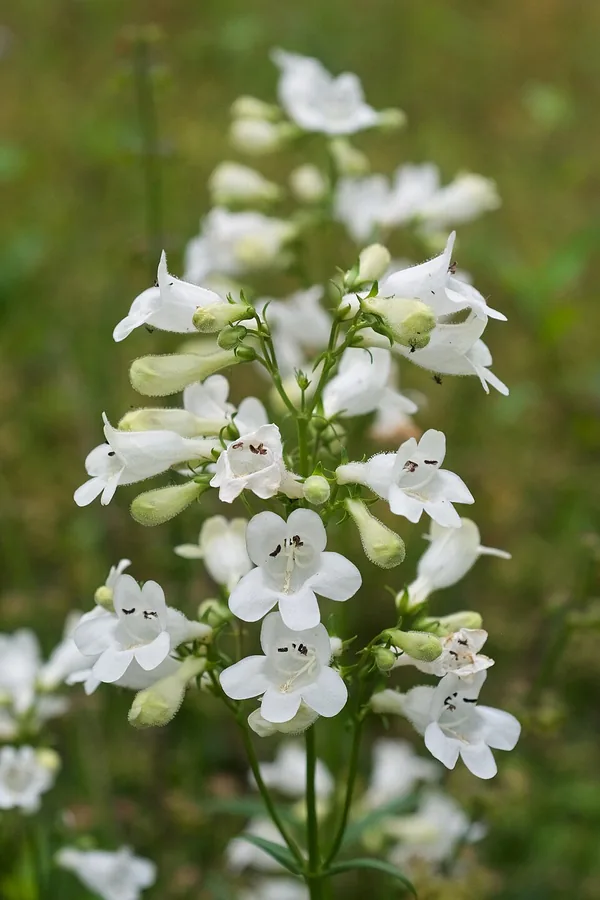
Beardtongue is a clump-forming native perennial from the figwort crowd, and it pulls real weight in a sunny border. Come late spring into early summer it launches tall spikes of white, two-lipped tubular flowers that keep bees and the odd hummingbird working the patch. That common name, foxglove beardtongue, tips its hat to the flower shape and nothing more, so forget any link to true foxglove.
The thrill of growing it is how much it delivers for how little it wants. It brushes off cold down to -29°F (-34°C), keeps cruising through dry spells once its roots dig in, and grows fast enough to close a gap in one season. Hand it sun and ground that drains, and it just takes off.
One habit keeps things lively: it spreads. Beardtongue self-seeds and the clump fattens year on year, so it will happily march past the spot you handed it. Stay ahead with a bit of deadheading and a division every few years, and it flowers hard right where you want it.
Care
The short version: full sun and sharp drainage are the whole game. Water moderately while it digs in, then let it ride out dry spells, feed it next to nothing, and lift and divide the clump every 2 to 3 years to keep the blooms rolling.
Light
Beardtongue flowers hardest in full sun, where the spikes shoot up straight and bloom by the armful. It will take partial sun or light shade, but expect a looser plant and fewer flowers for the swap.
Water
Water moderately while it digs in, letting the top half of the soil dry between drinks, roughly every 7 to 14 days. Once established it powers through drought, and the real trap runs the other way, because wet or poorly drained soil rots the roots, so lean dry and it thanks you.
Soil
It grows happily in loam, clay, or sand and asks only that the drainage delivers. Shoot for a pH between 5.5 and 7.0, and keep front of mind that sharp drainage beats rich soil here every time.
Temperature
This tough, cold-hardy native storms through winters down to -29°F (-34°C) and summer heat up to around 86°F (30°C). That range opens up a huge slice of the country with zero special protection.
Humidity
Average outdoor humidity keeps it perfectly happy, so there is no target to hit. Moving air matters more than moisture in the air, since still, crowded conditions are exactly what hand leaf spot an opening.
Feeding
A native that thrives on lean ground, beardtongue barely wants feeding. A light spring dose of balanced fertilizer or a splash of compost is plenty, and piling on richness only leaves it floppy.
Pruning
Deadhead the spent flower spikes through the season to keep it sharp and to rein in the self-sowing. Cut the foliage back in late fall or early spring to open the way for fresh growth.
Repotting
Beardtongue grows in the ground, not a pot, but it still craves regular renewal. Divide the clump every 2 to 3 years to keep it charging, and read declining bloom or a crowded, dying center as your green light.
Size & spacing
In flower these plants shoot to 2 to 4 feet (60 to 120 cm) tall and settle into a clump 18 to 24 inches (45 to 60 cm) across. Space them for that width so air rips through and leaf spot never gets a foothold.
When to plant
Beardtongue runs on a cool-season clock, and it is easy to time. The seed craves a cold, moist chill before it will pop, so sow it outdoors in fall or fire it up indoors in late winter after stratifying, set plants out in spring once frost clears, and chase those white spikes from May to July.
Northern hemisphere
Southern hemisphere
Typical months for a temperate climate: start earlier in warm zones, later where spring frosts linger.
- Sow: Late winter after 1-3 months cold-moist stratification
- Plant: Spring after last frost
- Harvest: May to July
Hardiness
USDA hardiness zones: 3–8
Temperature: down to -40°C
Troubleshooting
Beardtongue shrugs off most trouble, and what does crop up nearly always tracks back to wet soil or a clump that has outgrown its patch. Match the symptom below and jump on it early, while a quick fix still turns things around.
Wilting plant with a blackened base and mushy roots
This one is root or crown rot, and it takes hold when soil stays wet, most often through winter. The good part is the fix is clear: beardtongue powers through drought but hates wet feet, so chase drainage rather than reaching for the hose. Shift the plant to a raised, free-draining spot and cut out whatever has already turned to mush.
Fix:
- Improve drainage by amending soil or relocating to a raised, well-drained site
- Reduce watering and avoid wet winter soils
- Remove and discard severely rotted plants
Plant creeping past its spot and crowding neighbors
Beardtongue loves to grow, so it self-seeds and fattens its clump until it barges past the spot you gave it. Stay a step ahead by snipping the spent spikes before they set seed, which cuts the self-sowing, and yank any volunteers you did not plan on. Lift and split the clump every few years and it stays right where you steer it.
Fix:
- Remove unwanted seedlings
- Deadhead before seed set to limit self-sowing
- Divide and thin the clump
Spots and blotches scattered across the leaves
Those marks are fungal leaf spot, which shows up now and then and stays purely cosmetic. Snap off the marked leaves and the plant charges right along. Crank up the airflow and keep water off the foliage, and it clears out fast.
Fix:
- Remove and dispose of affected leaves
- Improve air circulation and avoid overhead watering
Toxicity
Great news for growers: beardtongue is safe. For all the foxglove in its common name, it carries none of true foxglove's poison and lands on no toxic plant list, so plant it freely around cats, dogs, livestock, and curious kids.
Safe for
People · Cats · Dogs · Horses · Rabbits · Livestock · Birds
Cats None
Cats can prowl right up to beardtongue, since it packs no toxic compounds at all. A curious nibble does nothing worse than that.
Dogs None
Dogs get the all-clear around this plant. A giant mouthful of any greenery might upset a stomach, but there is zero toxin waiting here.
Horses Safe
Horses stay perfectly fine around beardtongue. It skips the cardiac toxicity that makes true foxglove a problem.
Rabbits Safe
Rabbits can munch away with no trouble. The leaves and flowers hold nothing that would poison them.
Livestock Safe
Turn cattle, goats, and sheep loose near this plant without a second thought. It lands on no list of livestock toxins.
Birds Safe
Birds stay safe among the foliage and seed. The flowers pour out nectar for pollinators and threaten none of them.
People Safe
People, kids included, have the run of a beardtongue patch. The name tips toward foxglove, but it carries none of that plant's poison.
Generally safe around pets and people; no special handling required.
Varieties
Most gardens reach for either the wild species or one knockout cultivar loved for its dark foliage. These two are the ones to know.
Husker Red
This standout snagged the 1996 Perennial Plant of the Year title on the strength of maroon-red spring foliage that greens with age while flashing maroon veining and red stems all season.
Foxglove Beardtongue (species)
The straight species fires up tall clusters of white, two-lipped tubular flowers from late spring into early summer.
How to propagate
Beardtongue practically begs to be multiplied, whether you split an established clump, sow the ripe seed, or root a batch of summer cuttings to keep a favorite cultivar true.
DivisionEasy
Spring · One growing season
Division is the fast track to a whole patch of beardtongue, and it keeps the parent clump firing on all cylinders. Lift and split it in spring every 2 to 3 years, and each piece roots back in over a single growing season.
SeedModerate
Fall sow outdoors or stratify and sow late winter · Germinates best with cold-moist stratification and light; blooms typically the following year
Seed ripens in fall and wakes up best after a cold, moist chill and a hit of light. Scatter it outdoors in fall and let winter do the chilling, or stratify it and launch it in late winter, then watch for the first blooms the following year.
Stem cuttingsModerate
Summer · Several weeks to root
Grab softwood cuttings in summer to keep a named cultivar true, since seed will not carry the foliage color forward. The cuttings root over several weeks and then they are ready to pot on.
Myths
Foxglove beardtongue is poisonous like foxglove because of its name.
The name is a coincidence and nothing more. Penstemon digitalis lives in a whole different genus and packs none of the cardiac glycosides that make true foxglove dangerous. It shows up on no toxic plant list and stays safe around pets and people.