Ornamental · Saxifragaceae
Rodgersia
Rodgersia aesculifolia
Plant it in damp shade and watch rodgersia power out enormous, sculpted leaves season after season.
Partial shade
USDA 5–7
3–5 ft · 0.9–1.5 m
Overview
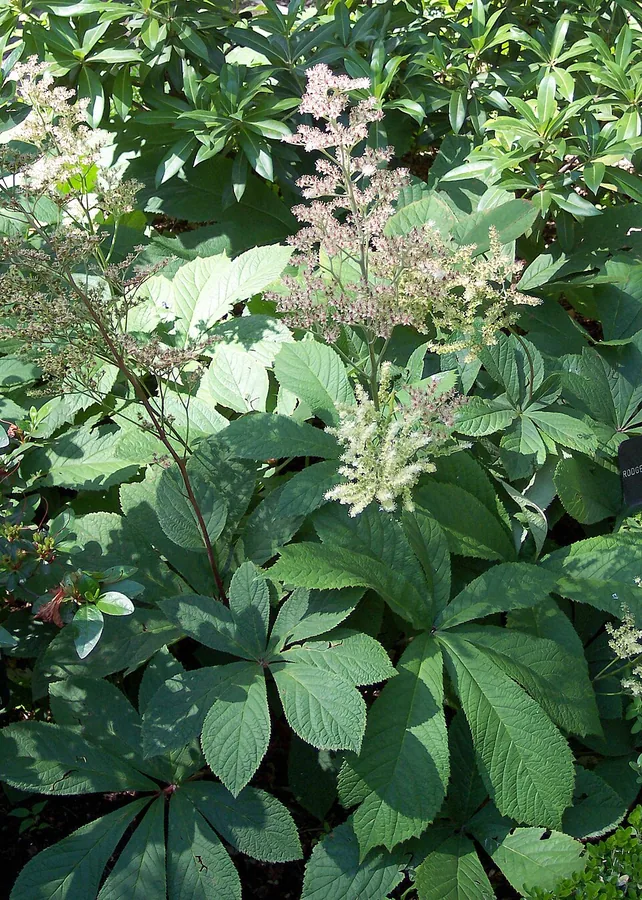
Rodgersia is a foliage plant worth getting excited about. Its big, deeply cut leaves open in the shape of a horse chestnut and fan out wide enough to take charge of a shady, damp corner. Then summer arrives and the plant fires up tall, branching flower plumes that echo an astilbe.
Here is where rodgersia really earns its keep: the wet, shady ground that stumps most perennials. Send it into a bog garden, along a pond edge, into a squelchy dip by a stream, or against the cool north wall, and it digs right in. Hardy and long-lived, it just keeps building year on year once it feels settled.
The one rule it insists on is steady moisture. Let the soil dry and the leaf edges crisp and brown fast, so that is the thing to stay ahead of. Keep the roots cool and damp and rodgersia rockets away with barely another demand.
Care
The short version: plant it in part to full shade in rich, humusy soil kept moist to wet, never let it dry out, and push it along with compost through the growing season.
Light
Aim rodgersia at part to full shade, and go shadier still where summers turn fierce. Harsh afternoon sun is the enemy here, scorching the leaf edges brown in no time.
Water
This is where the action is. Keep the soil moist to wet at all times and never let it dry, which is exactly why rodgersia storms away in bog gardens and along pond and stream banks. Let it go thirsty and the leaf margins brown within days, so stay on top of that watering.
Soil
Load it into rich, humusy soil brimming with organic matter that grips water. Keep it moist to wet but stop short of stagnant, standing muck, so a touch of drainage or gentle flow keeps everything moving.
Temperature
Rodgersia is a real trooper in the cold, riding out winter lows near -20°F (-29°C) and coping with summer heat up to about 75°F (24°C). It powers ahead in cool, temperate gardens and sulks in hot, dry ones.
Humidity
Forget fussing over humidity, since plain outdoor air does the job and no number applies. What rodgersia really chases is moisture at the roots, so keep the effort down at soil level.
Feeding
Dig compost or a balanced fertilizer into that rich soil through the growing season and the plant surges. A yearly organic mulch pulls double duty too, feeding it while locking damp into the ground.
Pruning
Pruning is quick and satisfying. Clip off the spent flower stalks once the blooms fade, and pull any tattered or browned leaves through the season to keep the clump crisp and driving forward.
Size & spacing
Give it room and rodgersia bulks up into a big clump around 3 to 5 feet (91 to 152 cm) tall and just as wide. Hand it the full 3 to 5 feet (91 to 152 cm) so those huge leaves can throw themselves wide open.
When to plant
Getting the timing right is a breeze. Plant out in spring the moment frost lets go, into a cool, moist, part-shaded spot, and it takes off to flower from June to August. After that it keeps bulking up its clump, better every season.
Northern hemisphere
Southern hemisphere
Typical months for a temperate climate: start earlier in warm zones, later where spring frosts linger.
- Sow: Sow seed in late winter to early spring; seed may need cool stratification.
- Plant: Plant outdoors in spring after frost in a moist, partly shaded site.
- Harvest: Blooms June to August with branched, astilbe-like panicles.
Hardiness
USDA hardiness zones: 5–7
Temperature: down to -29°C
Troubleshooting
Rodgersia is a tough, willing grower, and the few hiccups that crop up land on the leaves. Dry soil, prowling slugs, or a dusting of mildew cover almost all of it. Spot the symptom below, jump on it early, and the plant charges right back.
Scorched brown edges racing along the leaves
Those browning edges are leaf scorch, and they flag dry soil or too much sun hitting the foliage. Rodgersia runs on cool, damp roots, so soak the soil, shift it into deeper shade, and pack mulch over the crown to trap the moisture in.
Fix:
- Keep soil consistently moist
- Provide partial to full shade
- Mulch to conserve moisture
Ragged holes punched through the leaves
Ragged holes in those big leaves point straight to slugs and snails, which crowd the damp shade and munch away overnight, leaving slime trails as proof. Hunt them down after dark, scatter bait or lay a copper strip, and rake out the debris they duck under by day.
Fix:
- Hand-pick at night
- Use slug baits or barriers
- Reduce excess debris around plants
A powdery white dusting spreading over the leaves
That powdery white dusting is powdery mildew, and it pounces on crowded clumps or plants left parched. Strip the worst-hit leaves away, thin the clump to let air pour through, and hold the soil steadily damp so the plant never runs dry.
Fix:
- Improve air circulation
- Avoid drought stress
- Remove affected foliage
Toxicity
Great news for anyone gardening around pets or kids: rodgersia is not known to be toxic. It stays off the ASPCA list of plants that harm cats and dogs, and no trouble turns up for other animals or people. So plant with gusto and let everyone enjoy the patch.
Safe for
People · Cats · Dogs · Horses · Rabbits · Livestock · Birds
Cats Safe
Rodgersia does not make the toxic list for cats, so a chewed leaf will not do any real harm. A nosy cat might land a mild, short-lived stomach upset from gnawing the foliage, and that is the extent of it.
Dogs Safe
Dogs romp around rodgersia safely, since it packs no poison known to hit them. Bolt down a big pile of the coarse leaf and a dog might catch a quick, passing tummy ache, nothing more.
Horses Safe
No report ever ties rodgersia to poisoning in horses, so they can graze right alongside it without a worry.
Rabbits Safe
Rabbits shrug off rodgersia with no poisoning risk at all, and its big, coarse leaves rarely tempt them, so most hop straight past.
Livestock Safe
Cattle, sheep, and goats can work a damp pasture or pond edge planted with rodgersia, because it packs no toxin that touches them.
Birds Safe
Garden birds and poultry face zero danger from rodgersia, whether they peck the leaves or root around in the damp soil at its feet.
People Safe
Rodgersia is grown to admire, not to eat, and it will not poison anyone, so kids can dash around it in the garden with no worry.
Varieties
Only a couple of rodgersia types show up in gardens, and each one brings its own leaf or flower to play with. These two are the pair to chase down.
Rodgersia pinnata 'Superba'
The featherleaf star, throwing out bronze-purple young leaves that green up with age before firing off rose-pink to red flowers all summer.
Rodgersia podophylla
A bold performer with palmate leaves of 5 lobes, sometimes 7, stretching up to 16 inches across and blazing bronze-red as fall lands.
How to propagate
Bulking up your rodgersia is a fun, easy job, mostly by splitting a clump you already grow, plus seed if you fancy the slow route.
DivisionModerate
Divide thick rhizomes in spring or early fall. · One to two growing seasons
Division is the fast track to more rodgersia, and it is genuinely fun. In spring or early fall, heave up an established clump and carve the thick rhizomes into chunks, each packing a bud and some roots. Drop them into rich, moist soil and give them one to two growing seasons to hit their stride. Seed works too, and a thriving plant keeps spreading on its own as the rhizomes creep outward.
Myths
Rodgersia is a pond plant that has to stand in open water.
It is wild about moisture and thrives in the moist to wet soil hugging ponds and streams, but it is no aquatic. Keep the soil dependably damp and it will never need to sit in stagnant, waterlogged mud.