Ornamental · Saxifragaceae
Pigsqueak
Bergenia cordifolia
Tough, evergreen, and happy in the shade, bergenia carpets the ground and flowers when little else does.
Partial shade
Every 5–10 days
USDA 3–8
12–18 in · 30–46 cm
Overview
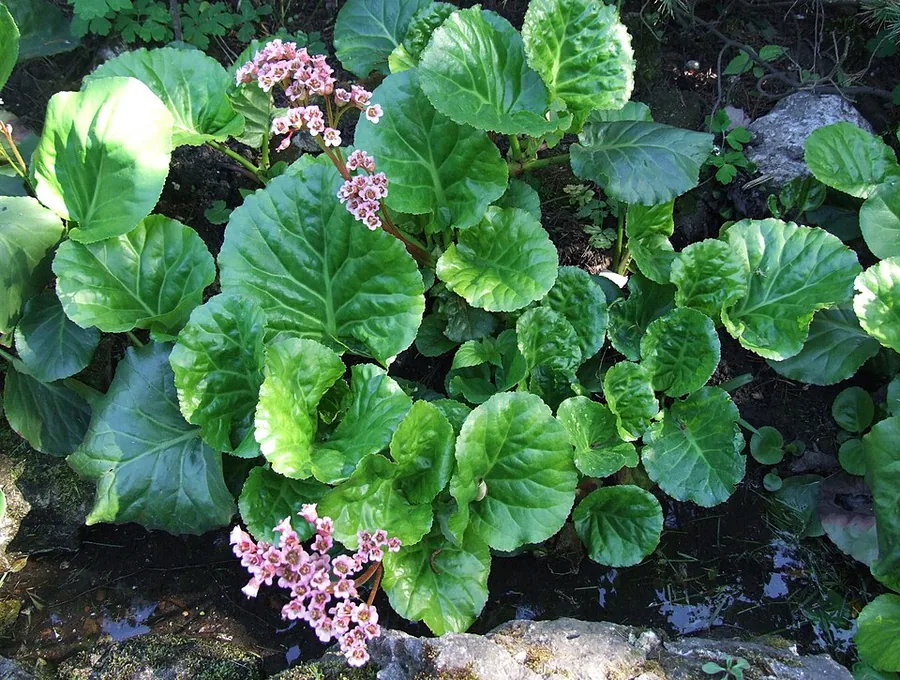
Bergenia, nicknamed pigsqueak for the squeak its leaves let out under a rub, ranks among the toughest groundcovers a gardener can put in the ground. It runs in the saxifrage family and pushes out by thick rhizomes that weave into a low, leafy mat. Those big, rounded, leathery leaves hand it a second nickname, elephant's ears.
What really wins people over is how stubbornly it refuses to quit. It powers through deep shade, soaks up sun wherever the soil stays moist, and shrugs off winters down to -40°F (-40°C) in the coldest zones. Deer and rabbits steer clear, and serious pests and diseases barely register.
And the payoff lands early. Clusters of pink, red, or purple flowers rocket up on stout stems in spring, sometimes as early as winter in mild southern gardens. Plenty of types also flush a rich bronze or red as the cold rolls in, so the foliage drives the planting straight through the off-season.
Care
The short version: part shade and steady moisture bring out its best, though it rolls with almost anything. Set it in organically rich, well-drained soil, water through dry spells, and divide the clumps every few years to keep the flowers coming.
Light
Bergenia hits its stride in part shade, but it rolls with almost any light. It takes full shade and full sun alike, though in hot, sunny spots keep the soil moist or the leaves scorch.
Water
Keep the soil consistently moist, especially that first season and anywhere the sun blazes. Established clumps shrug off short dry spells, so water roughly every 5 to 10 days, and step it up in full sun.
Soil
Average, organically rich, well-drained soil does the job, and it tackles sand, loam, or clay all the same. It runs across a wide pH from 5.5 to 8.0, so most garden ground works without amending.
Temperature
This plant is flat-out cold-hardy, powering through winters as low as -40°F (-40°C) and taking summer heat up to about 86°F (30°C). Its evergreen leaves can look beaten after a harsh, windy winter, but the crown comes through fine.
Humidity
Ordinary outdoor humidity covers it, so skip chasing a number. Steady soil moisture matters far more to bergenia than anything in the air.
Feeding
Feed lightly in spring with a balanced general-purpose fertilizer, or just top-dress with compost or leaf mold. One seasonal feeding powers this undemanding plant right along.
Pruning
Cut back damaged leaves in late winter to early spring so fresh growth can charge in, and snip off spent flower stems as the blooms fade. That yearly cleanup covers nearly all the maintenance it asks for.
Repotting
In the ground, lift and divide the clumps every 3 to 4 years once they crowd up or hollow out in the center. Crowded woody clumps, bare middles, and weaker flowering all wave the flag that it's time.
Size & spacing
Plants stay low at 12 to 18 inches (30 to 46 cm) tall and spread 9 to 24 inches (23 to 61 cm) wide. That slow, mat-forming spread turns bergenia into a dependable groundcover along the front of a shady bed.
When to plant
Bergenia holds its leaves all year and barely touches the calendar, which keeps the growing easy. Plant it in spring or early fall, watch for flowers in April and May, and clear the winter-worn foliage the moment new growth kicks off.
Northern hemisphere
Southern hemisphere
Typical months for a temperate climate: start earlier in warm zones, later where spring frosts linger.
- Sow: Late winter to early spring (seed is slow and variable; division is preferred)
- Plant: Spring or early fall
- Harvest: April to May (as early as December in warm southern climates)
Hardiness
USDA hardiness zones: 3–8
Temperature: down to -40°C
Troubleshooting
Bergenia hardly ever stumbles, and the rare hiccup almost always lands on the leaves. Spot the early signs below and you can knock out the cause before the planting looks rough. The crown holds up tougher than the foliage ever lets on.
Foliage going pale or thinning out
Dull, sparse leaves point straight at hot, direct sun teamed with too little water, and they slide downhill fast once the soil bakes dry. Slide the plant into afternoon shade in hot regions and keep the ground evenly moist to turn it around. Dig in some compost so the soil grips water, and the color bounces right back.
Fix:
- Move to part or afternoon shade in hot climates
- Keep soil consistently moist and add organic matter
Brown, ragged leaves rolling out of winter
This one is just plain winter burn, where cold and drying wind rough up the evergreen leaves while the crown underneath powers on undamaged. Frost heaving sometimes lifts the crowns and piles on a bit more wear. Grab the shears, cut the tattered foliage back in late winter, and watch fresh leaves shoot up from the base.
Fix:
- Cut back damaged foliage in late winter to early spring
- Allow fresh new growth to emerge from the crown
Toxicity
Great news for animal-loving households: bergenia is not known to be poisonous. It doesn't appear on the ASPCA toxic plant lists, and the leaves have even been brewed as Siberian tea. Plant it around pets, livestock, and children and grow with a clear head.
Safe for
People · Cats · Dogs · Horses · Rabbits · Livestock · Birds
Cats Safe
Bergenia packs no reported toxin, so a curious cat that grabs a nibble comes away just fine. A big mouthful of any plant can still kick off a little drooling or a brief upset stomach, and then it passes.
Dogs Safe
Bergenia stays clear off the ASPCA dog list and reports as harmless, so a romping dog has nothing to fear. The leathery leaves barely tempt a dog anyway, and a stray bite does zero harm.
Horses Safe
Nothing in the plant is known to hurt horses, so plant away near them. They breeze right past the tough, glossy leaves.
Rabbits Safe
Rabbits browse bergenia with no trouble at all, and it lands on plenty of lists they skip. Those thick leaves usually go untouched.
Livestock Safe
Cattle, goats, and sheep run zero poisoning risk from bergenia. It carries none of the toxins that turn other garden plants into a pasture worry.
Birds Safe
Backyard birds and poultry can hang around bergenia safely, since no harmful compound shows up in it at all. Nothing to flag here.
People Safe
The plant is harmless to handle, and the leaves have a long run brewed as Siberian tea. Still, wash your hands after gardening as a smart habit.
No special handling required; wash hands after gardening as a general practice.
Varieties
Most bergenias run the same rugged playbook, so the named types earn attention mainly for their flower color and winter foliage. These three show up often and spell out the range.
Winterglut (Winter Glow)
This one fires off deep rosy-red flowers and then circles back for a winter encore as the leaves flush a bronzy red.
Miss Piggy
Bright bubblegum-pink flowers shoot up on sturdy red stems above glossy leaves, packing more punch than the older types.
Abendglocken (Evening Bells)
It earns its name from reddish-purple, bell-shaped flowers, then warms to a rich reddish tone right through the colder months.
Companions
Bergenia pairs best with other plants that like rich, moist shade, where its bold leaves play off finer foliage around them.
Plant near
Hosta: Shares preference for moist, part-shade woodland conditions and contrasts in leaf texture.
Brunnera macrophylla: Both are shade-tolerant groundcovers that thrive in rich, evenly moist soil.
Heuchera (coral bells): Companionable Saxifrage-family relative for the front of a shady border with complementary foliage.
How to propagate
Bergenia multiplies in a snap, and splitting an established clump is hands-down the surest way to crank out more plants just like the one you already grow.
DivisionEasy
Late winter to early spring (or early fall) · One growing season
Division cranks out more bergenia fast and reliably. In late winter to early spring, or in early fall, dig up a crowded clump and pull the thick rhizomes apart into pieces, keeping roots and a growing point on each one. The divisions dig in and settle over a single growing season.
SeedModerate
Late winter to early spring · Slow; one or more seasons to reach flowering size
Seed pays off if you can wait it out. Sow in late winter to early spring and brace for slow, uneven germination, with a season or more before the plants hit flowering size. Named cultivars won't come true from seed, so divide those to nail an exact match.
Myths
Bergenia is dangerously poisonous and will burn a dog's mouth.
Toss this one out, because bergenia stays off the ASPCA toxic plant database and reports as harmless to cats and dogs by trusted sources. The burning-mouth warnings trace straight back to commercial plant-seller pages, not to vetted toxicology references. Grown as a tough ornamental, it carries no known poisoning risk to pets.