Houseplant · Asparagaceae
Spider Plant
Chlorophytum comosum
Hand it bright indirect light and a splash of water once the soil dries, and the spider plant races ahead while staying safe around your pets.
Bright indirect
Every 7–10 days
55–75°F · 13–24°C
USDA 9–11
Overview
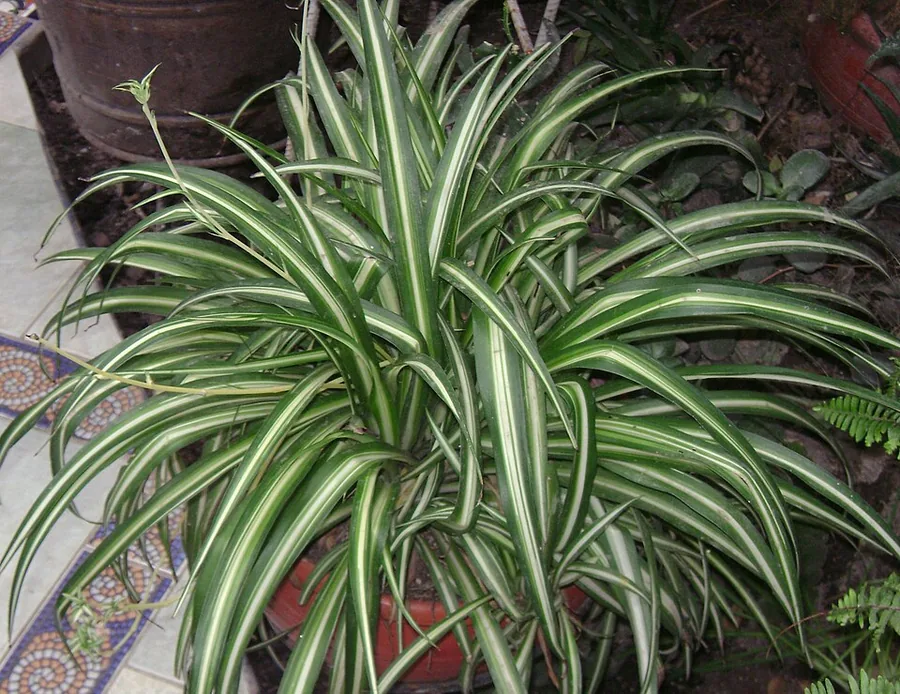
Hardly any houseplant lives alongside you this easily. Its roots trace back to the woodlands of southern Africa, where dappled shade rules, and that heritage explains why a dim corner barely fazes it indoors. Long, ribbon-shaped leaves cascade over the rim of a pot, earning it a top spot on a shelf or in a hanging basket.
The babies steal the show. A grown plant fires off slender, wiry runners capped with tiny plantlets, also known as spiderettes, that swing midair like little spiders on a line. Each roots fast, so one plant multiplies into a whole shelf of giveaway plants.
Safety wins over most households. Because the spider plant rates non-toxic to cats and dogs, a pet that swats the dangling foliage stays perfectly fine. Hand it indirect light and a drink once the soil dries, and it surges ahead while excusing nearly every rookie slip.
Care
The short version: park it in bright indirect light away from direct sun, give it a drink every 7 to 10 days once the top half of the soil dries, pot it in a well-draining mix, and hold the room between 55°F and 75°F (13°C to 24°C).
Light
Set the spider plant in bright indirect light and steer it clear of direct sun, which bleaches and singes the blades. It still manages in medium light, shade, even a dim corner, though the markings pop brightest under bright, filtered rays. A window seat behind a sheer curtain hits the mark.
Water
Wait for the top half of the soil to dry before the next drink, which tends to land near every 7 to 10 days. Scale it back through winter, when growth idles and the soil holds moisture longer. Those plump roots bank water, so the plant rides out a forgotten drink far better than a drenched pot.
Soil
Pot it in a well-draining general-purpose potting mix that lets water race through rather than puddle near the roots. Acidity hardly matters to it, and it flourishes anywhere across a pH of 6.0 to 8.0. The mix has one job, drainage, since pooling water breeds root rot.
Temperature
Everyday room warmth suits it, hitting its stride between 55°F and 75°F (13°C to 24°C). Steer it clear of chilly drafts and any corner that flirts with freezing, since at heart this is a tender plant. All it wants is a steady indoor climate.
Humidity
Run-of-the-mill household humidity works, so skip chasing any target. Parched winter air can crisp the leaf tips, and that stretch is prime time for a spider mite to move in. A fast leaf rinse or a water tray set nearby pitches in when your air turns very dry.
Feeding
Reach for fertilizer only across the spring and summer growing season, and quit through fall and winter. A half-strength balanced houseplant feed now and again does the trick. Tread lightly, because overdoing it scorches the leaf tips brown and trims back the plantlets you are after.
Pruning
A spider plant barely needs pruning past a quick tidy. Snip browned leaf tips on a slant to hold the blade's natural line, and clip spent flower stems once they wilt. You can also pull plantlets to pot up or to keep the plant trim.
Repotting
Aim to repot every 1 to 2 years, or the moment it turns rootbound. The tells stack up fast: roots crowding or cracking the pot, fleshy tubers heaving the soil upward, or the plant parching quick and slowing its plantlets. Bump it up a single pot size and swap in fresh mix.
Size & spacing
A spider plant reaches roughly 12 to 24 inches (30 to 60 cm) tall and fans out from 12 to 35 inches (30 to 90 cm) once the blades arch over and the babies swing below. Hand it room to cascade, since a shelf lip or a hanging basket flaunts it best. It races along, packing a pot in one season flat.
Troubleshooting
Spider plant trouble usually surfaces in the leaves first, with brown tips heading the pack. Spot these early tells and you can squash a minor hiccup before it grows. Pair what you notice with the entries below, then jump in while it still counts.
Yellow leaves above soft, mushy roots
Yellowing blades perched over waterlogged soil shout root rot from overwatering, and it escalates quickly. Lift the plant free, slice off every soft brown root, and settle it into fresh, quick-draining mix. From there, water sparingly and confirm the pot drains.
Fix:
- Unpot and trim rotten roots
- Repot in fresh well-draining mix
- Reduce watering
Faded, sun-scorched streaks running across the leaves
Faded, scorched foliage flags too much direct sun beating down on the blades. This plant thrives on bright indirect light and singes on a baking sill. Pull it back from the pane or tuck a sheer curtain between, so harsh noon rays never reach the leaves.
Fix:
- Move to bright indirect light
- Shield from midday sun
Stubborn brown bumps clinging to both leaf and stem
Those stuck-on brown lumps are scale insects, and the tacky shine beside them is the honeydew they excrete. Rub the lumps free with a cloth, then drench the plant in horticultural oil or insecticidal soap. Always vet a newcomer before it mingles with the others.
Fix:
- Wipe off scales
- Apply horticultural oil or insecticidal soap
Cotton-puff clusters wedged deep in the leaf bases
Cottony white tufts wedged where the leaves meet are mealybugs, one more sap drinker that smears a sticky coat behind it. Touch each tuft with a cotton swab dipped in rubbing alcohol, then chase it with insecticidal soap. Park fresh arrivals away from the group until they prove clean.
Fix:
- Dab with rubbing alcohol
- Apply insecticidal soap
Gauzy webbing and a peppering of tiny specks on the blades
Thin webs over speckled, dotted blades give away spider mites, which flourish in dry indoor air. Rinse the foliage at the tap, hit it with insecticidal soap or a miticide, and crank up the moisture around the plant. Humid air turns the leaves into lousy real estate for them.
Fix:
- Rinse foliage
- Apply insecticidal soap or miticide
- Raise humidity
Brown, crispy leaf ends on an otherwise thriving plant
Brown tips top every spider plant question list, yet they rarely point to a struggling plant. Blame fluoride, chlorine, and salt that pile up from tap water, sometimes alongside parched air or a heavy hand with feed. Pour distilled water or rainwater instead, rinse the pot through once in a while, and clip the dried ends back on a slant.
Fix:
- Water with distilled or rainwater
- Flush pot to leach salts
- Trim browned tips
- Ease off fertilizer
Swarms of tiny sap-suckers crowding the fresh new shoots
Squishy little bugs swarming the tender shoots, plus a sticky sheen, add up to aphids. One firm blast at the tap sweeps most of them away in a single pass. Back it up with insecticidal soap if they return, and watch the fresh shoots where they keep landing.
Fix:
- Rinse off with water
- Apply insecticidal soap
A lush, fast-growing plant with no spiderettes to show
A vigorous plant that skips the babies is usually just too young or too cozy in its pot. Spider plants kick out offshoots once they bulk up and grow a touch potbound. Dial back the feed, let it ripen, and hand it short days with long, pitch-dark nights for roughly 3 weeks to spark the display.
Fix:
- Let plant mature and become slightly potbound
- Reduce fertilizer
- Give short days and long uninterrupted nights ~3 weeks
Toxicity
Breathe easy, because this houseplant gives you nothing to fret over. The spider plant comes in non-toxic to cats, dogs, and people, so nothing needs stashing up high or tucking away. A pet that chomps a leaf runs no risk, and that reassurance fuels much of its popularity.
Safe for
People · Cats · Dogs · Horses · Rabbits · Livestock · Birds
Cats Safe
A cat can swat and gnaw the swaying leaves and walk away unscathed. Gorge on a pile and the worst result is a brief tummy grumble.
Dogs Safe
A dog can munch the foliage and feel just fine. Few leafy houseplants rank safer next to an inquisitive pup.
Horses Safe
Harmless to horses. A nosy muzzle can grab a mouthful and suffer nothing.
Rabbits Safe
Rabbits can graze it freely, but greens of any kind belong as just a sliver of their daily food.
Livestock Safe
Harmless to grazers. Cattle, goats, and sheep face zero poisoning danger from it.
Birds Safe
Fine around caged birds and backyard poultry. A pecked leaf does no damage.
People Safe
Harmless and safe near kids, which earns it a front-row spot in homes with adventurous toddlers.
Varieties
Spider plants arrive in a small lineup of named cultivars, told apart by the striping or curl of their leaves. Below sit the ones you stand the best chance of spotting by name.
'Vittatum'
Picture a spider plant and this classic comes to mind, sporting a creamy pale stripe down the center of every green blade.
'Variegatum'
This one reverses the layout, trimming each green leaf with crisp white edges in place of a central band.
'Bonnie'
A space-saving choice whose variegated blades twist and curl into loose coils rather than sweeping out flat.
'Milky Way'
Expect a wide pale-to-cream heart on this kind, with just a slim green stripe surviving along the rim.
'Mandaianum'
A pint-sized form bearing deep green blades laced with yellow, tidy enough for a cramped nook or a shelf.
How to propagate
Few plants multiply as readily as the spider plant, and those swinging babies handle most of the labor. Root the plantlets, carve up a packed clump, or chase the slow path from seed if patience is on your side.
Offsets & pupsEasy
Anytime plantlets present · 2-4 weeks
Here lies the joy of the plant, and the simplest route to a bigger collection. Press a plantlet, also called a spiderette, onto moist soil while it still hangs from the parent, or perch it in water until roots sprout and then pot it. Either path roots up in around 2 to 4 weeks, after which you cut it loose as a standalone plant.
DivisionEasy
At repotting or spring · Few weeks
Once a hefty clump crams its pot, splitting it is another option. During repotting or come spring, ease the plant out and tear the fleshy, tuberous root ball into chunks, each holding leaves and roots. Pot every chunk separately and they take hold within a few weeks.
SeedModerate
Spring · Several weeks
Starting with seed is the patient route and a rarity. Sow them in spring and allow the seedlings several weeks to anchor. Bear in mind that seed-raised plants may stray from the parent, so a variegated mom can deliver plain green offspring.
Myths
Growing spider plants indoors filters the air enough to notice.
That celebrated air-scrubbing claim traces back to a sealed-box trial, not an actual living room. A peer-reviewed review pegged the slice a potted plant strips from your air as minuscule beside one open sash. Crack a window to freshen the air, and keep the plant because it delights you.
Crispy tips spell the beginning of the end for the plant.
Crispy tips startle people, yet the plant below them usually hums along fine. Trace it back to fluoride, chlorine, and salts in tap water, or parched air, not a fading plant. Pour distilled water or rainwater and the next flush of leaves arrives spotless.
Spider plants need bright direct sun.
Direct sun is the single condition this plant refuses, since it scorches the blades pale. What it craves is bright indirect light, and it copes happily in shade and low light besides. Spare it a roasting sill and the leaves hold a rich, uniform green.
Spider plants are dangerous for a pet cat or dog to chew.
That fear shuts a wonderful plant out of pet households over nothing. The ASPCA lists the spider plant as non-toxic to both cats and dogs, which stands as its strongest draw. A pet nibbling the foliage faces no risk whatsoever.
Piling on the fertilizer multiplies the spiderettes.
Drowning it in fertilizer backfires on the very goal you chase. Heavy feeding shrinks the plantlet count and scorches the leaf tips brown. Light balanced feed across spring and summer, paired with a potbound plant, is what coaxes the babies out.
Tap water is fine for spider plants.
Straight tap water is the typical culprit behind crispy leaf ends. Its fluoride and chlorine accumulate and singe the tips over the months. Reach for distilled water or rainwater, and rinse the pot through occasionally to clear out the salts.
Sources
- ASPCA
- NC State Extension Gardener Plant Toolbox
- University of Wisconsin-Madison Horticulture Extension
- Clemson Cooperative Extension HGIC
- Missouri Botanical Garden Plant Finder
- South Dakota State University Extension
- Royal Horticultural Society
- Journal of Exposure Science & Environmental Epidemiology (Cummings & Waring 2020)
- Drexel University