Ornamental · Geraniaceae
Wild Geranium
Geranium maculatum
Give it dappled shade and moist woodland soil and this tough native throws a pink carpet across the spring garden.
Partial shade
Every 5–10 days
USDA 3–8
8–24 in · 20–61 cm
Overview
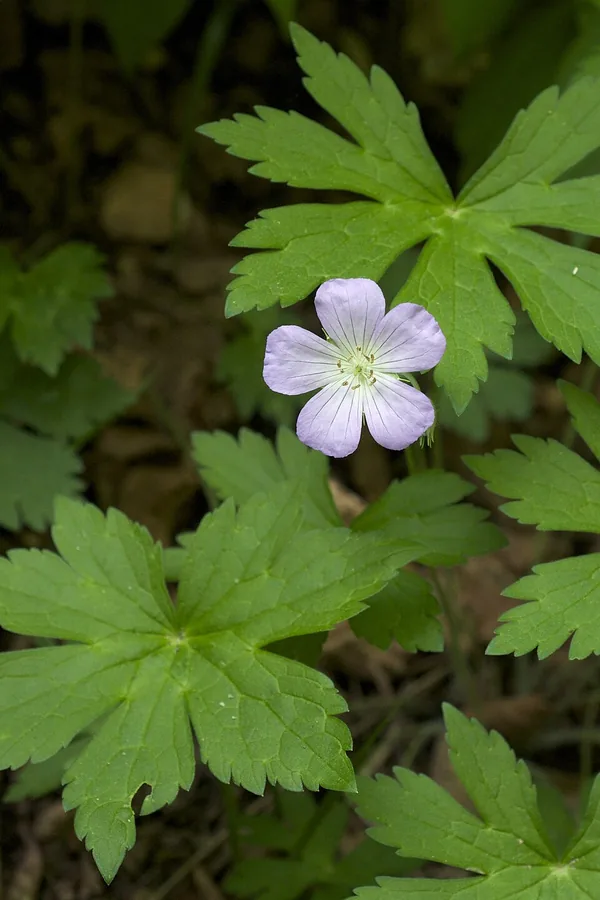
Wild geranium brings the woodland floor to life as a clump-forming native perennial, the true Geranium that growers also call cranesbill for the long, beak-shaped seed pods it forms once the blooms fade. From mid to late spring it fires up loose sprays of pink to lavender flowers over deeply cut, lobed leaves. It rides in the genus Geranium, well worth keeping straight from the scented Pelargonium sold as a houseplant.
Here is the fun part: this easy, low-maintenance plant delivers loads of reward for almost no effort once it settles in. It digs into part shade and rich, humus-filled soil just like the forest floor it hails from, then travels slowly by rhizome into a tidy, ground-covering clump. Its flowers reel in bees and flies, which turns it into a standout for native and pollinator plantings.
It powers through winters from zones 3 to 8 across a huge range, and it shakes off most pests and diseases without a fuss. The one thing that trips it up is hot, dry soil in midsummer, which leaves the foliage yellow and tired. Keep it cool and moist and it holds its good looks from spring clear through fall.
Care
The short version: hand it part shade and rich, moist, humus-rich soil, keep it evenly watered through the summer heat, feed it lightly if the soil is already good, and divide a crowded clump every few years.
Light
Wild geranium thrives in partial shade, the dappled light of a woodland edge. It takes full sun where the soil stays reliably moist, and it handles full shade too, but harsh sun over dry ground scorches the leaves fast.
Water
Keep the soil evenly moist, roughly every 5 to 10 days, and never let it bake dry. Established plants shrug off the odd dry spell, but the foliage yellows in a hurry through a hot, dry summer if the roots run short.
Soil
It craves rich, humus-rich, well-drained soil, the loose woodland kind loaded with leaf mold, though it adapts to clay or sand without complaint. Aim for a slightly acidic to neutral range of pH 5.5 to 7.0.
Temperature
This plant laughs off the cold, running strong across -40°F to 95°F (-40°C to 35°C) and winter-hardy through USDA zones 3 to 8. Summer heat is not really the enemy; the dry soil that tags along with it is.
Humidity
Ordinary outdoor humidity suits it just fine, so there is nothing to dial in. What really counts is good airflow through the clump, since stagnant, damp air throws the door open to rust and leaf spot.
Feeding
Rich woodland soil feeds this plant all on its own, so go light. A spring topdressing of compost or a balanced fertilizer is every bit of feed it ever wants, and even that is optional in good ground.
Pruning
There is almost nothing to do here, which is half the joy. Deadhead spent flowers or shear tired foliage back after bloom to spark a fresh flush of leaves, and otherwise let it run.
Repotting
In the ground it only asks for dividing when a clump crowds itself, every 3 to 4 years. A jammed, declining center, weaker flowering, or yellow summer leaves wave the flag that it is time to lift and split.
Size & spacing
Mature plants shoot up to about 8 to 24 inches (20 to 61 cm) tall with a matching 12 to 24 inch (30 to 61 cm) spread. Hand each clump that much room and it fills in fast without shoving its neighbors.
When to plant
Wild geranium runs on the woodland calendar, so lean into its rhythm. The seed needs a cold spell to fire up, so sow it in late winter after 2 to 3 months of cold stratification, drop young plants outside in spring after the last frost or in fall, and watch for flowers rolling in from April through June.
Northern hemisphere
Southern hemisphere
Typical months for a temperate climate: start earlier in warm zones, later where spring frosts linger.
- Sow: Late winter after 2 to 3 months cold stratification
- Plant: Spring after last frost, or fall
- Harvest: April to June (mid to late spring)
Hardiness
USDA hardiness zones: 3–8
Temperature: down to -40°C
Troubleshooting
Wild geranium hardly ever hits real trouble, and nearly everything you spot is only cosmetic. The usual suspects are damp-loving fungi, hungry slugs, and summer heat. Match what you see below and jump on it early, while a quick move still counts.
Orange-brown pustules or dark spots on the leaves
Those marks usually signal rust or a leaf spot fungus, which jump in whenever the foliage stays wet and the air stalls around a packed clump. Snap off the spotted leaves and bin them straight away, then aim your watering low at the base to keep the leaves dry. Rake up the fallen debris come fall and you shut the door on next year's spores.
Fix:
- Remove and destroy affected leaves
- Improve air circulation and avoid overhead watering
- Clean up fallen debris at season end
Ragged holes in the leaves with silvery slime trails
Ragged leaves and glinting trails give away the culprits: slugs and snails, which pile in after dark and after rain. Grab a flashlight at dusk and pick them off, or scatter iron-phosphate bait right where they feed. Then sweep away the boards, mulch piles, and damp corners so they lose every daytime hideout.
Fix:
- Handpick snails and slugs in the evening
- Set out traps or iron-phosphate bait
- Remove damp hiding spots such as debris and boards
Foliage yellows and looks tired by midsummer
Wild geranium hates to bake, so dry soil in summer heat is what drives the leaves yellow and shabby. Soak it deeply through every hot dry stretch and pile on organic mulch to trap that moisture right at the roots. Even a clump that already looks spent bounces straight back: shear it down hard and it fires out a fresh round of leaves.
Fix:
- Water deeply during hot dry periods
- Apply organic mulch to conserve moisture
- Shear back declining foliage to flush fresh growth
Toxicity
Great news for pet owners: true wild geranium, Geranium maculatum, is not toxic and rates as safe around cats, dogs, livestock, and people. The whole mix-up starts with the name. The scented houseplant geranium, Pelargonium, is a different genus, and that is the one that actually poisons pets.
Safe for
People · Cats · Dogs · Horses · Rabbits · Livestock · Birds
Cats None
Cats can brush right past or nibble wild geranium and stay perfectly fine, since Geranium maculatum packs no reported toxins. The plant that earns a second look is the scented Pelargonium, a separate genus and the one ASPCA actually flags.
Dogs None
Not a single case of dog poisoning is on record for true wild geranium, so a curious chew barely registers. Just keep it straight from the toxic Pelargonium sold as a houseplant.
Horses None
Horses can graze right around a woodland patch of wild geranium with zero worry, since this species lists no toxic compounds at all.
Rabbits None
Rabbits, wild or pet, can nibble away at the foliage with no harm coming to them.
Livestock None
Cattle, goats, and sheep run into no listed risk from this native geranium, out in pasture or in the garden.
Birds None
Birds stay safe around the plant, and its spring flowers pull in busy pollinators like bees and flies.
People None
No poisoning risk hangs over people either; a quick hand wash after handling any garden plant covers it.
No special handling required; wash hands after gardening as a general precaution.
Varieties
Most gardens run the straight species, and it is a winner, but a handful of selected forms show up for their darker leaves or fresh flower colors. These are the ones to chase down.
Espresso
Its standout chocolate-brown to reddish-brown foliage makes the pale pink to lavender flowers pop.
Elizabeth Ann
It pairs bronze-tinted leaves with cool blue-lavender blooms for a knockout combination.
Album
A crisp white-flowered form of the species, listed botanically as f. albiflorum.
Companions
Plant near
Ferns: Share the same part-shade, moist woodland conditions and contrast in foliage texture.
Woodland phlox (Phlox divaricata): Blooms at the same spring time in similar shade gardens for a layered native display.
Wild columbine (Aquilegia canadensis): Native spring woodland companion that suits the same shade and soil and supports pollinators.
How to propagate
Wild geranium spreads itself by rhizome, and you can speed things along by dividing established clumps or by sowing the seed it flings around.
DivisionEasy
Fall or early spring · One growing season
Division is the fast, satisfying route to more plants. Lift a clump in fall or early spring and tease the rhizomes apart; they often branch at tidy right angles that snap cleanly along the joints. Tuck the divisions back in and they root down and take off inside a single growing season.
SeedModerate
Sow fresh in fall outdoors, or stratify cold 2 to 3 months and sow in spring · One to two growing seasons
Seed rewards a bit of patience, and it is a fun one to try. Bag the ripening heads first, because the capsules fling their seed the instant they are ready, then gather it as they darken. Sow fresh outdoors in fall, or hand the seed 2 to 3 months of cold stratification and sow in spring, and expect one to two seasons before the young plants hit their stride.
Myths
Every plant called a geranium is toxic to cats and dogs.
The real offender is the scented houseplant geranium, Pelargonium, which ASPCA lists as poisonous to cats and dogs thanks to geraniol and linalool, bringing on vomiting, loss of appetite, low mood, and skin irritation. True wild geranium, Geranium maculatum, sits in a completely different genus and carries no toxicity listing at all. The shared common name is the only thing that trips people up.