Houseplant · Strelitziaceae
Bird of Paradise
Strelitzia reginae
Pour on all the sun you can and wait out a few patient years, and the crane flower pays you back with one of the boldest blooms you can grow indoors.
Full sun
50–81°F · 10–27°C
USDA 10–12
3–5 ft · 0.9–1.5 m
Overview
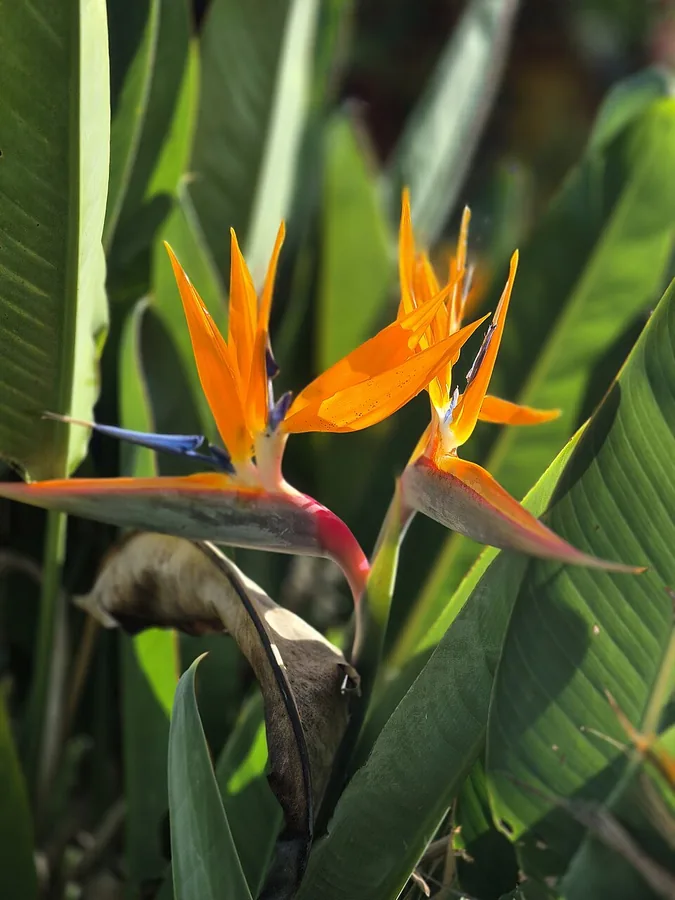
The bird of paradise lives up to its name the second it flowers: an orange-and-blue bloom unfurls from a beak-shaped bract that genuinely reads as a crane mid-flight. This clump-forming perennial hails from South Africa and travels everywhere on the strength of those striking flowers and its broad, banana-like leaves. Most growers run it as a houseplant, but plant it somewhere frost-free and it thrives outdoors just the same.
Light and time are the two things it demands. It craves every bit of sun you can spare, and no amount of careful watering will coax a bloom from a shady corner. Patience pays here as well. A young plant can take several years to bulk up before it flowers at all, so the payoff belongs to the grower who sticks with it.
Once it digs in, the routine runs smooth. Steady warmth, moist air, and a pot it can almost burst keep it growing strong, and the two biggest pitfalls are a waterlogged mix and weak light. Nail those, and the plant practically runs itself.
Care
The short version: park it in the brightest spot you own, keep the soil moist yet never soggy through the growing season and drier come winter, hold the humidity high, and let it sit slightly pot-bound to draw out the flowers.
Light
Hand this plant every hour of direct sun you can, ideally a south-facing window or the sunniest patch outdoors. It puts up with partial shade, but sun is the switch that flips on flowering, so a dim corner buys you healthy leaves and zero blooms.
Water
All through the warm growing season, pour it on freely and keep the mix moist but never waterlogged. Indoors, let the top of the potting mix dry a touch between drinks, and back right off once winter lands. A soggy pot that rots the roots is the quickest way to lose it.
Soil
Set it in a fertile, well-drained loamy mix loaded with organic matter. Drainage outranks every other factor, since lingering moisture is what opens the door to root rot.
Temperature
It hits its stride between 50°F and 81°F (10°C to 27°C) and won't take frost at all. Haul container plants inside before the cold rolls in, and keep it above about 50°F (10°C) to keep it growing.
Humidity
This plant thrives in moist air, around 50% to 60%. In dry indoor rooms, winter especially, mist it or perch the pot on a tray of wet gravel to stop the leaf edges from crisping up.
Feeding
Feed it through spring and summer only, using a water-soluble houseplant fertilizer, every two weeks in spring and bumping to weekly in summer. Cut it off for fall and winter, and go easy: a heavy hand pushes leaves and shorts you on flowers.
Pruning
Pruning stays light. Trim off spent flower stalks plus any dead or badly shredded leaves, then buff the foliage clean with a soft cloth. Steer clear of leaf-shine products, which gum up the leaves.
Repotting
Repot only when it truly demands it, since this plant blooms better when pot-bound and a roomy pot just stalls the flowers. Top up the upper few centimeters of soil each year, and step up the pot size only in early spring once roots have filled or split the container.
Size & spacing
Indoors it climbs to roughly 3 to 5 feet (90 to 150 cm) tall and fans out about 2 to 4 feet (60 to 120 cm) wide, so hand a mature clump enough space for those broad leaves to arch.
Troubleshooting
Nearly every bird of paradise hiccup ties back to light, water, or cold. The leaves flag it first, so match your symptom below and jump on it before a minor slip turns into a real setback.
Yellowing, wilting leaves over waterlogged soil
A plant that flops in mix that stays wet points straight to root rot, brought on by a soggy medium or heavy watering. Pop it out of the pot, snip off every brown, mushy root, and settle it into fresh, fast-draining mix. Going forward, water only once the top of the mix has dried, and run it on the dry side all through the cool stretch.
Fix:
- Remove from pot and cut away rotted roots
- Repot into fresh, fast-draining mix
- Water only after the mix has dried slightly and ensure good drainage
Leaves blackened and slack after a freeze
Frost flattens this plant fast, because it carries zero cold tolerance: leaves caught near freezing go black, water-soaked, and limp. Move containers inside ahead of the first frost, then snip the wrecked foliage away once the chill clears. For steady growth, keep it from sitting below about 50°F (10°C).
Fix:
- Bring container plants indoors before first frost
- Remove damaged foliage once danger of frost has passed
No flowers, year after year
The number one cause is not enough light: a grown plant pushes out those crane-shaped flowers only when it gets close to full sun. Age plays in too, since a seedling or a fresh division spends years building up to flowering size. Hold off on moving it into a bigger pot, because blooms come faster when the roots stay slightly pot-bound, and dial back the feed if you keep growing leaves and no flowers.
Fix:
- Move to the brightest possible spot with several hours of direct sun
- Allow the plant to mature and become pot-bound rather than repotting
- Replace only the top layer of soil yearly instead of up-potting
- Reduce fertilizer if foliage is lush but flowers are absent
Tiny webs, white fluff, or brown lumps appearing
Grown inside, this plant tempts the usual lineup of sap-feeders. Thin webbing with stippled, speckled leaves flags spider mites, fluffy white tufts give away mealybugs, and little brown bumps clinging to stems and leaves mark scale. Sponge the foliage clean, hit it with insecticidal soap or horticultural oil, and quarantine the plant away from the rest until you win.
Fix:
- Wipe leaves with a soft cloth
- Treat with insecticidal soap or horticultural oil
- Isolate affected plants and repeat treatment as needed
Brown, crispy edges along the leaves
Dry indoor air drives this, and it hits hardest once winter heating kicks in. Uneven watering that lets the mix bake out completely pushes it further. Crank the humidity toward 60% with a mist or a tray of wet gravel, water on a regular beat, and keep the feed going right through the growing season.
Fix:
- Raise humidity by misting or standing the pot on a tray of damp gravel
- Water consistently so the mix does not dry out completely
- Feed regularly during the growing season
Big leaves tearing along the veins
Good news: nothing is wrong here. Those broad paddle leaves tear along their veins by design, opening gaps that let gusts slip through instead of pushing the plant like a sail. It stays perfectly healthy. Want the leaves to hold together? Shift an outdoor plant to a calmer, more sheltered corner.
Fix:
- No treatment needed - splitting is a natural response
- Move outdoor plants to a more sheltered spot if intact foliage is desired
Toxicity
Count this plant as mildly toxic, with the irritating compounds packed into the fruit and seeds. A nosy pet that chews on it will most likely end up with a queasy gut rather than anything dangerous, yet keeping the flowering stalks and dropped seeds out of reach still pays off. Never mix it up with the far more poisonous shrub that goes by the same common name.
Toxic to
Cats · Dogs · Horses · Rabbits · Livestock · Birds · People
Cats Mild
A cat that picks at the fruit or seeds tends to drool, bring it back up, and go listless. Most cats recover on their own, though a vet call makes sense if the signs hang around.
Dogs Mild
Look for light queasiness, a bout or two of vomiting, and a dog that acts worn out. The irritants ride in the fruit and seeds, so a chewed leaf rates as a much smaller concern.
Horses Mild
A horse that munches the fruit or seeds can wind up nauseous and sluggish. Keep flowering stalks well clear of any spot where horses graze.
Rabbits Caution
The gut irritants that trouble cats and dogs hit a rabbit just as badly. Block grazing on the plant, and sweep up any dropped seeds before they get nibbled.
Livestock Caution
Goats, sheep, and cattle can take a stomach upset from the fruit and seeds. A quick mouthful seldom turns serious, but this plant makes poor forage.
Birds Caution
Keep pet birds from pecking at the seeds or fruit. Count the whole plant as out of bounds and set out safe greens for them instead.
People Caution
Nobody grows any part of this plant for eating, and the fruit and seeds can churn the stomach. Make sure small children never pop the seeds in their mouths.
Toxic principles are concentrated mainly in the fruit and seeds
Helpline numbers

United States
ASPCA Animal Poison Control: (888) 426-4435 (fee applies)
Poison Control: (800) 222-1222



Canada
Poison Centres: 1-844-764-7669
Varieties
Plain orange is the species nearly everyone grows, though one named pick earns a spot on your list.
'Mandela's Gold'
A head-turning pick that swaps the usual orange for yellow and purple flowers, lifting out of a grey-and-pink spathe.
How to propagate
Two routes will make you more plants, and they head in opposite directions: one races ahead, the other puts your patience to the test.
DivisionModerate
Early spring, when the clump is root-bound · Divisions can flower within a year or two
Dividing the rhizome clump is your shortcut to blooms. Tackle it in early spring once the plant has packed its pot, slicing the clump into chunks that each hold onto a fan of leaves and a portion of root. A solid division can flower within a year or two, well ahead of anything raised from seed.
SeedDemanding
Fresh seed, germinated warm (75-90°F) · Germinates in 6-12 weeks; 4-10 years from seed to first flower
Seed rewards the long-game grower. Start with fresh seed and hold it warm, around 75°F to 90°F (24°C to 32°C), and sprouting still drags out over 6 to 12 weeks. After that comes a wait of 4 to 10 years for the first flower, which is exactly why most growers reach for division.
Myths
The crane flower is the very same plant, and packs the same danger, as the shrubby bird of paradise.
A shared common name is the only thing linking them. The crane flower is Strelitzia reginae, which the ASPCA flags as only mildly toxic, good for a touch of stomach upset and little else. The shrub sold under the same name is the unrelated Caesalpinia gilliesii, and it packs far more poison. The ASPCA spells out plainly that the two should never be confused.
Shredded, splitting leaves point to an unhealthy plant.
Those tears are completely normal. The wide paddle leaves split along their veins on purpose, letting wind blow straight through, and it shows up most outdoors or in a draft. Not a scrap of harm comes to the plant, and the only way to keep the foliage whole is to tuck it out of the wind.
Sources
- NC State Extension Gardener Plant Toolbox
- University of Wisconsin-Madison Division of Extension
- Clemson Cooperative Extension HGIC
- Royal Horticultural Society (RHS)
- UF/IFAS Gardening Solutions
- Missouri Botanical Garden Plant Finder
- NC State Extension Gardener Plant Toolbox
- ASPCA Animal Poison Control
- Plants of the World Online, Royal Botanic Gardens Kew