Ornamental · Osmundaceae
Cinnamon Fern
Osmundastrum cinnamomeum
Hand it wet, acidic shade and the cinnamon fern rockets up tall green fronds and rust-colored spikes year after year.
Partial shade
Every 2–4 days
USDA 3–9
2–5 ft · 0.6–1.5 m
Overview
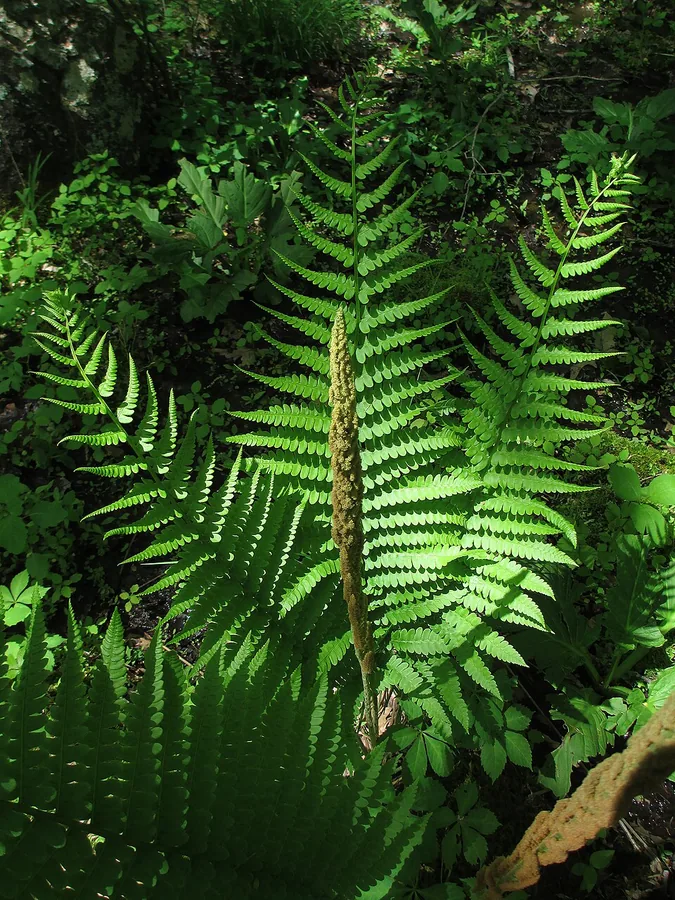
Cinnamon fern charges into the wet, shaded ground most plants avoid, a big clump-former native to North American bogs and woodlands that does the same trick across much of eastern Asia. Each spring the crown shoots up a ring of upright green fronds that climb to 2 to 5 feet (60 to 150 cm), flaring into a clean vase shape. Out of the middle rise separate fertile fronds packed with rust-colored spores, the cinnamon-brown spikes that hand the plant its name.
Point it at the soggy, shadowed corners that defeat everything else and watch it thrive. Pond edges, rain gardens, stream banks, and low spots that stay wet all play to its strengths, and it powers through cold right down to USDA zone 3. Growth holds at a steady clip rather than a sprint, but a thriving clump pushes out to 2 to 4 feet (60 to 120 cm) across and bulks up bigger every year.
Its wish list runs short and easy: shade, acidic ground, and water that keeps flowing. Let the soil dry through summer and the fern fires up its own defense, dropping into early dormancy and shedding fronds long before fall. Keep it watered and it stays lush and full from the first spring fiddlehead straight through to the first hard frost.
Care
The short version: part to full shade, rich acidic soil kept consistently moist to wet, and steady water all season so it never dries out and quits on you early.
Light
Cinnamon fern thrives in partial to full shade, soaking up the dappled light of a woodland floor. Push it into full sun if you must, but only where the soil stays wet enough to keep the frond edges from scorching.
Water
Water is the one demand this fern never lets slide. Keep the soil consistently moist to wet, hitting it every 2 to 4 days in dry weather, and never let it dry out. It powers through standing water and boggy ground, but a summer drought kicks it straight into early dormancy.
Soil
Plant it into rich, humusy, acidic ground that grips moisture, aiming for a pH of 4.5 to 6.0. Boggy, low-lying spots that stay wet are its sweet spot, and a thick blanket of leaf mold keeps the roots cool and damp.
Temperature
Cold barely registers, since it powers through from -40°F to 86°F (-40°C to 30°C), blanketing USDA zones 3 through 9. Brutal winters roll right off it, because the crown rides them out dormant underground until spring.
Humidity
Hailing from wet woods and bog edges, it likes the air on the damp side, around 50% to 80%. Drop it in a naturally moist, shaded spot and the humidity sorts itself out, leaving you nothing to chase.
Feeding
Rich soil means feeding barely makes the to-do list. A light spring top-dressing of compost or leaf mold covers it, and in really good ground you can skip even that.
Pruning
Leave the healthy green fronds standing all season. The one cut worth making clears out the old, dead, or frost-damaged fronds in late winter, right before the new fiddleheads come charging up.
Repotting
Established clumps rarely beg for a move. Once the crowns crowd and overlap and the fronds shrink, that is your green light to lift and divide rather than just relocate the plant.
Size & spacing
Gear up for a vase of fronds 2 to 5 feet (60 to 150 cm) tall, fanning out to 2 to 4 feet (60 to 120 cm) wide over time. Hand each crown that much room so the mature clump can really stretch out and fill in.
When to plant
Forget harvest timing with this fern and zero in on the one planting window that counts. Get new plants in the ground in spring as the soil warms and the fiddleheads start rising, handing the crown a full season to dig its roots in before winter rolls through.
Northern hemisphere
Southern hemisphere
Typical months for a temperate climate: start earlier in warm zones, later where spring frosts linger.
- Plant: spring
Hardiness
USDA hardiness zones: 3–9
Temperature: down to -40°C
Troubleshooting
Here is the great part: cinnamon fern shrugs off serious pests and diseases, which means nearly every hiccup tracks straight back to dry soil. The fronds flag thirst fast, so they tip you off the moment the plant runs short. Jump on it early and one deep soaking usually flips things right back around.
Crisp, scorched-looking edges creeping along the fronds
Dry roots drive this one almost every time. Cinnamon fern springs from bogs and wet woods, so the moment the soil runs dry the frond edges crisp and brown, and the worst of it lands on whatever side soaks up the most sun. Hit it with a deep, soaking watering to pull the soil back to evenly moist, pack leaf mold around the base to lock that moisture in, and slide the plant into deeper shade if it has been sitting out in full sun.
Fix:
- Water deeply to keep soil consistently moist
- Mulch with leaf mold to retain moisture
- Provide more shade if sited in full sun
Fronds yellowing and dropping out early in summer
Don't write the plant off when it yellows and folds in the heat. Once the soil dries in midsummer the fern fights back by going dormant, pulling its fronds down well ahead of schedule to ride out the dry spell. It bounces back next spring almost without fail, so kick off steady deep watering again and dig plenty of organic matter into the soil to lock in the moisture it craves.
Fix:
- Resume consistent deep watering
- Improve soil organic matter and moisture retention
Toxicity
Homes packed with pets and kids can relax with this one. Cinnamon fern is a true fern with no known toxin, so a curious nibble won't poison a cat, a dog, or anyone else. The single thing to track is the wiry, cinnamon-colored hairs at the base of the fronds, which can scratch or irritate sensitive skin, so wash your hands after handling them.
Safe for
People · Cats · Dogs · Horses · Rabbits · Livestock · Birds
Cats None
Let a curious cat explore this one freely. Cinnamon fern is a true fern that packs no known toxin, so a nibbled frond does no harm. About the only thing that might follow is the mild upset any pet gets after wolfing down too much greenery.
Dogs None
Dogs can romp around this fern with zero risk. The fronds carry no toxic compound, though it pays to steer a hard chewer clear of the stiff fibers at the frond bases.
Horses None
Horses face nothing harmful in the fronds. Plant it boldly along paddocks and the edges of pasture.
Rabbits None
Rabbits can graze this fern with total confidence. Neither the young fiddleheads nor the mature fronds hide any toxin.
Livestock None
Cattle, goats, and sheep shrug it off completely. It stays safe out in fields and across the wet ground where stock wander.
Birds None
Birds get nothing but a perch from the fronds and spores. Backyard flocks can scratch and forage around the crowns to their heart's content.
People None
No poison lurks here, and people happily gather the fiddleheads of related ferns each spring. Just keep an eye on the wiry hairs at the frond bases, which can scratch sensitive skin, so wash your hands once you finish handling them.
The cinnamon-colored hairs and fibers at the frond bases may cause mild mechanical skin irritation in sensitive individuals.
Varieties
Most growers reach for cinnamon fern as the straight wild species, but botanists track a couple of regional forms well worth knowing.
var. glandulosum
Pick this form out by the glandular hairs racing along its frond axes, and hunt for it across the southeastern reaches of North America.
var. asiaticum
The Asian form sweeps from the Russian Far East down into Indochina.
How to propagate
Seed is a dead end with this fern, because ferns make none. The dependable move is dividing an established clump, with spore-growing waiting in the wings for the patient grower.
DivisionModerate
Early spring before the fronds unfurl · 1-2 years
Multiply your stock the sure way: dig up an established clump in early spring, before the fiddleheads open, and split that crown into pieces. Give each division a year or two to dig in and bulk up. Spore-sowing on a moist, sterile mix opens another path for the bold grower, though it crawls along and demands real care.
Myths
Cinnamon fern is where culinary cinnamon comes from.
The name chases the color, not the spice, pointing straight at the cinnamon tone of the fibers and the fertile fronds. Real cinnamon is the bark of unrelated Cinnamomum trees, so this fern brings nothing to your spice jar.
Cinnamon fern spreads and reproduces by seed.
Ferns skip seeds and flowers entirely. This one multiplies through spores, launched from the separate upright fertile fronds, those rust-colored spikes that hand the plant its name.