Ornamental · Osmundaceae
Interrupted Fern
Claytosmunda claytoniana
Give it damp shade and rich, acidic soil, and this tough native fern rockets fresh fronds up every spring.
Partial shade
Every 3–7 days
USDA 3–8
2–5 ft · 0.6–1.5 m
Overview
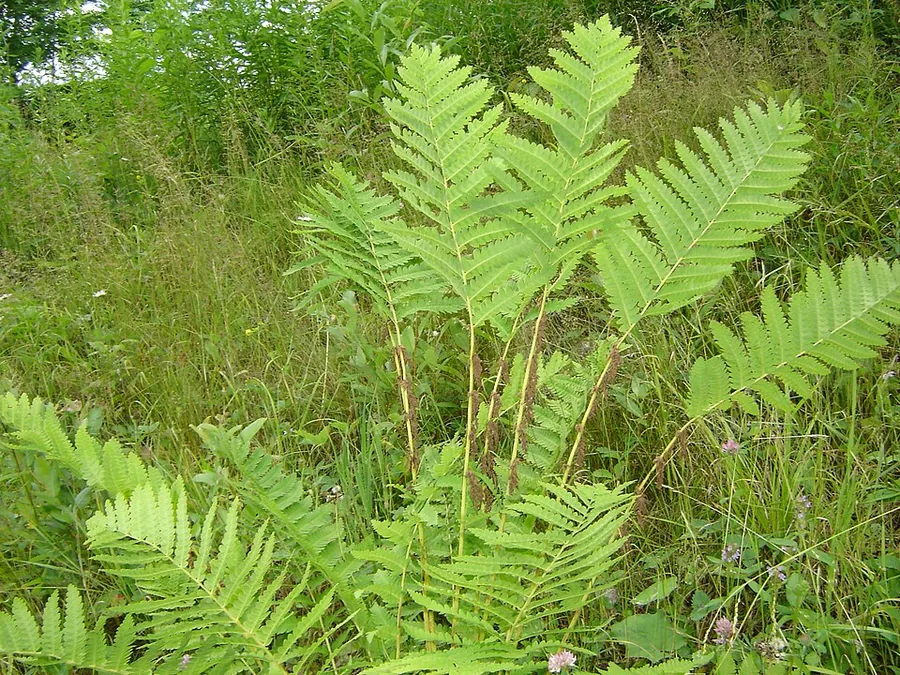
The interrupted fern turns a shady, damp corner into something worth showing off, and it does it with almost no effort from you. Look at the frond and the name clicks into place: a few pairs of brown, spore-bearing leaflets sit dead center and cut through the green, so the leaf looks interrupted mid-stride. Those fertile leaflets shoot up in mid to late spring and drop away by summer, leaving a crisp green arch that carries the show.
This woodland native is a genuine powerhouse of toughness. It powers through winters down to -40°F (-40°C) and flat-out ignores the deer and rabbits that mow down softer plants. Feed it steady moisture and it builds a wide, vase-shaped clump that comes back bigger and bolder every single year.
Grow it for texture and grit rather than flowers, since it makes none, and it never misses them. Its closest lookalikes are the cinnamon fern and the royal fern, but only this one sports that band of brown leaflets across the middle of its fronds, so telling them apart is a snap.
Care
The short version: part to full shade, soil kept evenly moist and a touch acidic, and a yearly top-dressing of compost. Once it settles in, it asks for next to nothing beyond water when the weather turns dry.
Light
Part shade hits the sweet spot, but this fern flexes hard and takes anything from full shade to full sun. Sun comes with one string attached, water, since it only powers through bright, open spots where the soil stays soaked at all times.
Water
Keep the soil consistently moist and never let it dry out, and pour it on more often when the weather turns dry. This is a wetland fern to the core, so quit worrying about overdoing it, it laughs off soggy ground and short bouts of standing water that would rot most plants flat.
Soil
It hunts for moist, humus-rich, acidic ground, thriving best around a pH of 4.5 to 6.5. Past that it barely cares, digging into clay, loam, or sand alike as long as the moisture keeps coming.
Temperature
Precious few garden plants match this grit. It powers across a range from -40°F to 86°F (-40°C to 30°C), muscling through savage northern winters and charging back every spring.
Humidity
Like most woodland ferns it wants the air on the damp side, ideally around 50% to 80% humidity. Out in the garden, steady soil moisture and a shady, sheltered spot knock out most of that for you.
Feeding
This fern barely bothers with food. One spring top-dressing of compost or leaf mold does the whole job, feeding the soil slowly the way leaf litter drops and breaks down on a forest floor.
Pruning
Routine pruning? Skip it entirely. Just cut away dead or tattered fronds in late winter or early spring, before the new growth rockets up, to keep the clump crisp.
Repotting
Containers aren't its thing, so think dividing, not repotting. Lift and split established garden clumps every 3 to 5 years, a move that also fires up a crown that's started dying out in the center.
Size & spacing
A grown clump shoots up 2 to 5 feet (61 to 152 cm) tall and spreads 2 to 4 feet (61 to 122 cm) wide. Hand each plant room for that full spread so the fronds can arch out big without jostling their neighbors.
When to plant
Get this fern into the ground in spring, once the soil thaws and starts to warm. Fresh fronds unfurl the moment the season opens, the brown fertile leaflets burst up in the middle of each one by mid to late spring, and they drop off by midsummer while the green powers on through fall.
Northern hemisphere
Southern hemisphere
Typical months for a temperate climate: start earlier in warm zones, later where spring frosts linger.
- Plant: spring
- Harvest: Non-flowering; fertile pinnae appear in the middle of the frond in mid-to-late spring and typically wither by midsummer
Hardiness
USDA hardiness zones: 3–8
Temperature: down to -40°C
Troubleshooting
An interrupted fern throws almost nothing at you, and when it does, dry soil or too much sun is nearly always behind it. Scan the fronds and the crown for the early signs below, then chase down the real cause instead of the symptom.
Fronds browning and crisping along the edges
Almost every time, the trouble is dry soil, and hard sun cranks it up fast. This fern craves damp roots around the clock, so soak it deeply and pack on a mulch of leaf mold or compost to trap that moisture where the roots want it. Catch a plant roasting in full midday sun and shift it to shade, and it bounces right back.
Fix:
- Water deeply to keep the soil consistently moist
- Mulch with leaf mold or compost to retain moisture
- Relocate to a shadier site if planted in full sun
A hollow center with all the action out at the edges
Great news, this is just an aging rhizome crown, not a disease, and it hits most mature clumps in time. Dig it up in early spring, split it, and replant those vigorous outer sections while the spent middle goes on the compost heap. Divide it every few years and the whole clump keeps roaring along, plus you score free plants.
Fix:
- Divide the clump in early spring and replant the healthy outer sections
Toxicity
Pet owners, breathe easy: this true fern packs no known toxins, so plant it anywhere cats, dogs, and other animals roam. It's no food plant, but a curious nibble hurts nobody, and get this, the species is famous for shrugging off rabbit and deer browsing.
Safe for
People · Cats · Dogs · Horses · Rabbits · Livestock · Birds
Cats None
Cats and this fern get on just fine. Let a curious one taste a frond and nothing bad follows, though a giant mouthful of any plant can still stir up a little short-lived stomach upset.
Dogs None
Dogs are in the clear around it, since it packs no toxins at all. Even a full-on chewing spree buys nothing worse than some mild, passing tummy trouble.
Horses None
Horses run no risk from this true fern, which carries nothing that would poison them. Grazers skip right past it anyway, so exposure barely happens.
Rabbits None
Rabbits can roam the same garden with zero worry. The plant famously brushes off rabbit browsing instead of causing them any grief.
Livestock None
Cattle, goats, and sheep face no threat from it. Stock breeze right past it, and a stray mouthful lands no damage.
Birds None
Nothing in the fronds spells trouble for birds, so backyard poultry and wild fliers can rummage around it freely.
People None
Handle it all you like, since there's no irritant lurking in it. It's not a food plant, so give your hands a quick rinse after digging, just plain garden habit.
No documented toxicity. Handle normally and wash hands after working with soil.
Varieties
There's no sprawling lineup of named selections here, and that keeps things simple. The one form worth knowing is the wild type itself.
Osmunda claytoniana var. vera
This is the classic wild form of the interrupted fern, an infraspecific variety that Wherry named and that Kew's Plants of the World Online still keeps on its list.
How to propagate
The fastest way to grow your stock of interrupted ferns is to split an established clump rather than fiddle with seed, since it runs on spores instead.
DivisionModerate
Early spring · 1-2 years
The surefire way to grow your collection is to split a settled clump in early spring. Lift the rhizome crown, carve it into pieces, and replant, just remember the fern creeps along slowly on horizontal rhizomes and a fresh division takes 1 to 2 years to dig in and bulk up. It'll also seed itself from the spores on the fertile leaflets, but that route drags and demands real patience, so it's rarely the play.
Myths
The interrupted fern pumps out flowers or seeds.
Not a chance, it never flowers and sets no seed. Like every fern it spreads by spores, riding here on a band of brown fertile leaflets slotted into the middle of an otherwise green, sterile frond.
Interrupted fern, cinnamon fern, and royal fern are one and the same.
Nope, they split into three distinct species under the family Osmundaceae. Spot the interrupted fern in a heartbeat by that band of brown fertile leaflets breaking up the middle of each frond, with green leaflets stacked above and below.