Ornamental · Osmundaceae
Royal Fern
Osmunda regalis
Feed it wet, acidic soil and shade, and this giant fern powers up fronds that climb higher than you stand.
Partial shade
Every 2–4 days
USDA 3–9
2–6 ft · 0.6–1.8 m
Overview
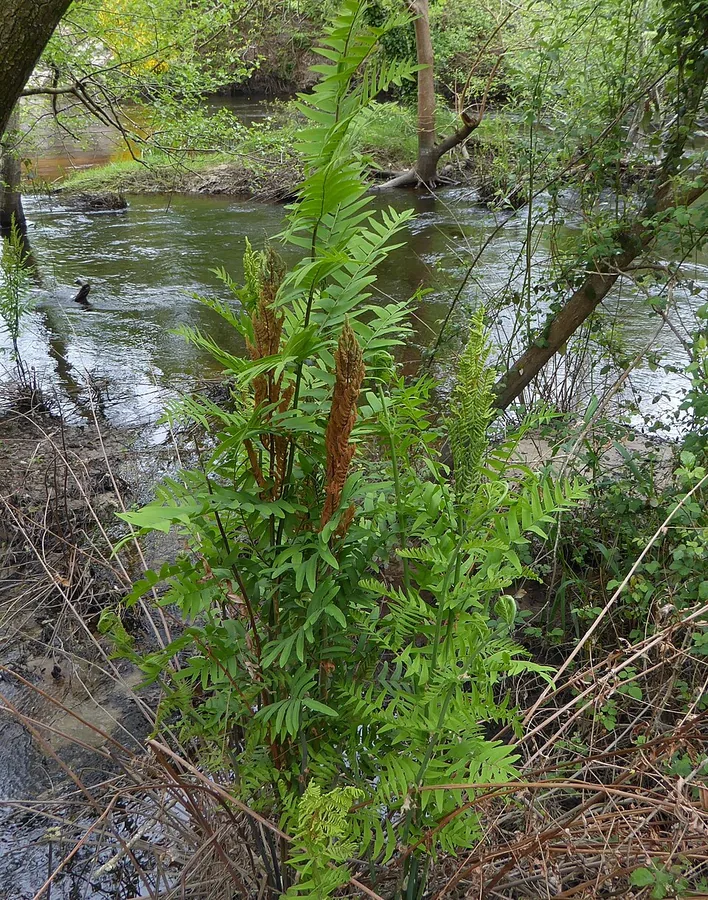
Here is a fern that truly earns attention. Royal fern grows into one of the biggest, most graceful ferns around, driving arching fronds up to 6 feet (180 cm) when it hits its stride. It traces back to an ancient family, the Osmundaceae, and packs itself into a full, shrub-like clump that more than lives up to its royal name. Watch the fertile frond tips late in the season: they flush rusty brown and load up with spores, the quirk behind the old name flowering fern, even though it never once flowers.
Nail the moisture and this fern takes off. It craves water right at the roots, so it powers away along pond edges, in boggy corners, and anywhere the ground holds moist to wet through the year, and it will happily stand in a little shallow water. Hand it acidic, humus-rich soil and some shade, and there is little left for it to want.
Toughness is part of the fun here. It storms through cold down to -31°F (-35°C) and bounces back every spring from the same woody crown. The fronds drop away in autumn, then come racing up as fiddleheads the moment the weather warms, so a damp, shaded corner never stays quiet for long.
Care
The short version: plant it in shade with soil that never dries, kept acidic and loaded with organic matter. Keep it moist to wet, give it a light spring feed, and then let it power ahead on its own.
Light
Partial shade is where it really thrives, the dappled light under open trees. It will push on in full shade or even full sun, but only reach for full sun where the soil stays reliably wet, since dry roots plus strong sun scorch the fronds in a hurry.
Water
This is where the whole thing is won. Keep the soil moist to wet and never let it dry out, watering every 2 to 4 days and stepping it up in heat or sun. It thrives at a pond margin or in a bog and will even take a little shallow standing water in stride.
Soil
Set it up in moist, rich, humusy soil that runs acidic, ideally a pH of 4.5 to 6.5. Clay, loam, or sand all work as long as the ground stays wet, and a hearty dose of leaf mold or compost really gets it going.
Temperature
This fern shrugs off a huge temperature range, from -31°F to 86°F (-35°C to 30°C). That grit lets it grow far north, and every year it dies back and comes charging up again from the crown.
Humidity
Like most ferns, it wants damp air, roughly 50% to 80%. Sheltered spots near water hand it that for free, which is exactly why it storms ahead beside a pond or stream.
Feeding
Go easy on the feeding and it rewards you. A spring topdressing of compost or leaf mold usually does the trick, or work in a balanced slow-release fertilizer once as growth fires up.
Pruning
Barely anything to tackle here. Clip off the faded, browned, or frost-killed fronds in late autumn or early spring, before the fresh fiddleheads shoot up, and then stand back.
Repotting
Growing it in a container? Repot only every 3 to 4 years, because it resents having its roots disturbed. It flags the need for more room when roots break out of the drainage holes, the woody crown climbs above the soil, and the fronds come up smaller and weaker.
Size & spacing
Clear some space, because a mature clump powers to 2 to 6 feet (60 to 180 cm) tall and spreads 2 to 3 feet (60 to 90 cm) wide. Space your plants generously so each crown can throw out a full, commanding mound.
When to plant
Royal fern runs on an easy seasonal rhythm. Get new plants in during spring or early autumn while the soil is cool and damp, cheer on the fiddleheads as they unroll in the warmth, and watch for those rusty fertile tips from late spring into summer.
Northern hemisphere
Southern hemisphere
Typical months for a temperate climate: start earlier in warm zones, later where spring frosts linger.
- Plant: Spring or early autumn
- Harvest: Non-flowering; spore-bearing fertile frond tips develop late spring to summer
Hardiness
USDA hardiness zones: 3–9
Temperature: down to -40°C
Troubleshooting
Almost every royal fern hiccup traces to a single culprit: soil that dried out. Brown tips, early yellowing, weak growth, they all lead straight back there, so hit the moisture question first. Pin down the symptom below and jump on it while the crown is still going strong.
Frond Edges And Tips Turning Brown And Crispy
Crispy brown edges nearly always spell drought stress, the one thing a royal fern flat-out refuses to forgive. It runs on soil that stays moist to wet, so dry roots, blazing sun, or a drying wind torch the tips fast. Turn it around: water deeply, pile mulch over the root zone, and shift any container plants into part shade.
Fix:
- Water deeply and keep soil consistently moist to wet
- Apply organic mulch to conserve moisture
- Move container plants to part shade or provide afternoon shade
- Trim badly damaged fronds at the base
Fronds Yellowing And Collapsing Early In Summer
Let a dry spell bite and this deciduous fern can slam into early dormancy, quitting for the year ahead of time. It looks rough, but the woody crown almost always pulls through and fires up fresh fronds next spring. Get deep watering going again and clear out the collapsed growth.
Fix:
- Resume deep, consistent watering to keep soil wet
- Cut back collapsed fronds; the crown usually re-flushes the following spring
Pale, Washed-Out Fronds Growing Weakly
Thin, yellow-green growth usually flags soil that has turned too alkaline or too lean for a fern that hungers for acidic, humus-rich ground, and patchy watering piles on. Dig in fibrous, acidic matter like leaf mold or composted bark, hold the moisture even, and it charges back.
Fix:
- Incorporate fibrous, acidic organic matter such as leaf mold or composted bark
- Maintain even moisture
Toxicity
Great news if pets or kids roam the garden: royal fern is a true fern and rates as non-toxic. Chew a frond and the worst outcome is a little passing stomach upset, with no real poison to speak of. The fine hairs or spores can nip at sensitive skin, so a quick hand wash after a long stint of handling keeps things easy.
Safe for
People · Cats · Dogs · Horses · Rabbits · Livestock · Birds
Cats None
Royal fern is a true fern and completely safe around cats. A curious nibble might spark a little drooling or a brief upset stomach, and that is the whole story.
Dogs None
Nothing here lays a dog low. At worst, a chewed frond leaves a pup with some mild, short-lived digestive upset that clears on its own.
Horses None
Horses can graze right alongside it with zero worry, since the fronds pack no poison. A big mouthful of any greenery can loosen the gut for a bit, and that is all.
Rabbits None
Rabbits can tuck into a royal fern without harm. As with any new leafy green, roll it out slowly so their digestion keeps pace.
Livestock None
Cattle, goats, and sheep take no poison from this fern, so it makes a smart pick for the damp fringes of grazing ground.
Birds None
Garden birds and pet birds are perfectly safe around the fronds and spores, with nothing toxic to peck.
People None
It is safe around children, with no poison anywhere in the plant. The young fiddleheads of some ferns get cooked and eaten, though the spores or fine hairs can nip at a few people's skin.
Royal fern is not known to be toxic, but as with any non-food plant, chewing fronds may cause mild, transient gastrointestinal upset, and spores or frond hairs can be a minor contact irritant.
Varieties
The straight species already delivers, but a handful of named forms are worth chasing down for extra color or a different shape. Start with the ones below, the easiest to get hold of.
'Purpurascens'
Its fresh fronds and stalks burst out in a rich purple-bronze that leaps against the mature green growth.
'Cristata'
Crested, forked tips ripple along the fronds and pinnae, handing the whole plant a tasselled, frilled look.
var. spectabilis
This is the North American royal fern, which some split off as its own species, Osmunda spectabilis.
'Gracilis'
A leaner, more compact form that fires up its new growth with a reddish tint.
How to propagate
Royal fern builds up its numbers at a steady clip, either by splitting a well-grown crown or by raising fresh plants from its short-lived spores.
DivisionModerate
Early spring or autumn · 1 to 2 growing seasons
The reliable way to multiply royal fern is to split the woody crown in early spring or autumn, handing each piece its own roots and growing points. It hates being disturbed, so divide only now and then, and give a fresh division 1 to 2 growing seasons to dig in and bulk up. Keen to try spores? Scatter the short-lived green spores onto moist, sterile peat the second they ripen, keep them humid and shaded, and hold out several months while tiny prothalli and then young ferns break through.
Myths
The flowering fern lives up to its name and blooms.
Not a chance, since it never blooms. Those flower-like clusters riding the frond tips are packed sporangia loaded with spores, and the plant powers its next generation with spores, not flowers or seeds.
Ferns get their start from seed.
Ferns skip seeds entirely. Royal fern springs from the spores its fertile tips fling off, or you can lift and split the crown to crank out more plants.