Houseplant · Oxalidaceae
False Shamrock
Oxalis triangularis
Purple, three-cornered leaves that throw open by day and fold up at night, sprouting from easy little bulbs.
Bright indirect
55–75°F · 13–24°C
USDA 8–11
6–18 in · 15–46 cm
Overview
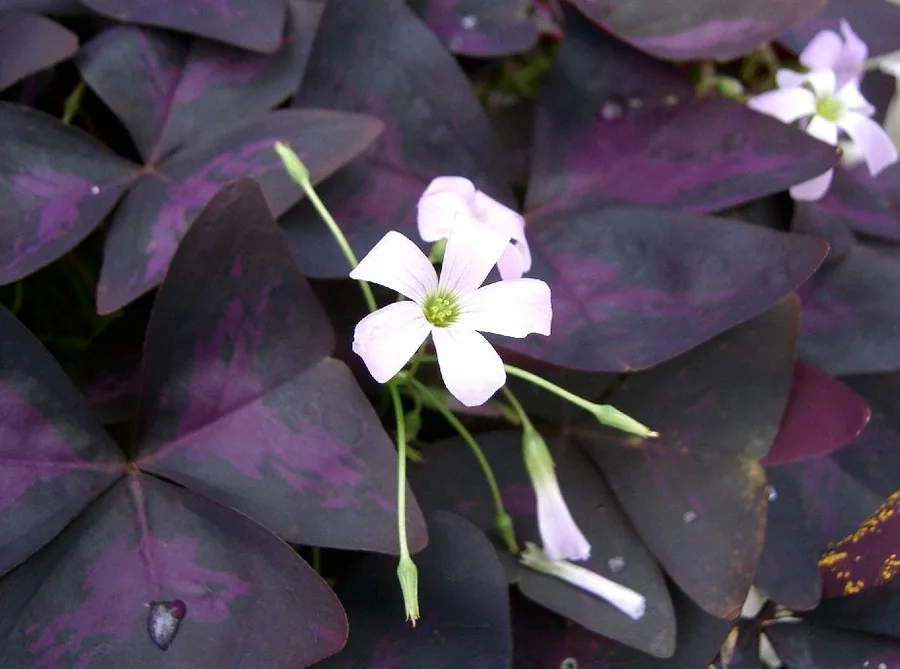
False shamrock wins gardeners over with its leaves long before its flowers. Each one bursts into three deep purple, triangular leaflets that open in the morning and fold down at dusk, so the whole plant seems to breathe through the day. It hails from Brazil and Paraguay, springs from small bulbs, and turns a bright windowsill into something genuinely fun to grow.
The die-back is the part that throws most people, but it is half the magic. After a hot stretch or in autumn, the leaves yellow and collapse and the pot looks finished. It is not. The plant is just going dormant, banking its energy in the bulbs underground until a cool spell and a fresh drink wake it, and then it rockets back in full.
It thrives on very little. Bright indirect light, soil kept barely moist, and a bit of patience while it rests pretty much cover it. The one thing to flag is that every part holds oxalic acid, so keep it clear of pets that love to chew.
Care
The short version: bright indirect light, soil kept barely moist but never soggy, and cozy room warmth between 55°F and 75°F (13°C to 24°C). Let it die back and rest when it slows, then water again and watch it spring back to life.
Light
Park it in bright, indirect light to pull out the deepest leaf color. It happily takes some full sun and shrugs off partial shade, but skimp on light and the plant stretches leggy while the purple washes out toward green.
Water
Keep the soil barely moist but never wet, letting the top inch or so dry between drinks, since soggy soil rots the bulbs fast. The moment the leaves start to die back, ease off and then cut watering off entirely so the plant can rest.
Soil
Plant it in a loose, well-drained potting mix, soil-based or soilless. It shrugs off texture and thrives across a wide pH range from 6.0 to 8.0, so grab almost any general houseplant mix as long as water rushes through it freely.
Temperature
Cozy room warmth suits it best, ideally 55°F to 75°F (13°C to 24°C) with cooler nights. It balks at real heat, which is often the exact thing that kicks it into an early dormancy.
Humidity
Average household air keeps it happy, so skip chasing any humidity number. It cares way more about steady moisture at the roots than about damp air around the leaves.
Feeding
Feed a balanced houseplant fertilizer about once a month, but only from spring through fall while it is charging through active growth. Cut feeding off the moment it goes dormant, since dormant bulbs cannot use it.
Pruning
Pruning here is just quick tidying. Pull or snip off any yellowing or dead leaves, and whip out any rust-marked foliage the second you spot it to stop the fungus spreading.
Repotting
Repot every few years, or jump on it sooner once the bulbs crowd the pot and the leaves shrink. Tuck the bulbs just under the surface in a well-drained mix, and seize that moment to divide a clump that has grown dense.
Size & spacing
Look for a low mound about 6 to 18 inches (15 to 46 cm) tall, spreading 12 to 24 inches (30 to 61 cm) wide. Its small size and slow, neat habit drop it easily onto a windowsill or a shelf.
Troubleshooting
Hardly anything trips up this plant, and the one thing that looks scary is actually part of the fun. Get the knack of spotting a normal die-back versus a real problem and growing it stays a joy. Match what you see below before you grab the watering can.
Rusty orange pustules and spots erupting on the leaves
This is oxalis rust, a fungus that throws up orange to brown bumps on the leaf surface with discolored patches around them. Snip off and bin the affected leaves the instant you spot them. Open the plant up so air can move and keep water off the foliage, since the spores spread on wet leaves.
Fix:
- Prune and dispose of diseased foliage
- Improve air circulation and avoid wetting foliage
Leaves yellow, collapse, and the plant looks done for
Hold off on panic, because this is almost always natural dormancy, not a sick plant. False shamrock grows from bulbs that rest each year, usually after a hot spell or in autumn, and the leaves simply die back while the bulbs wait underground. Stop watering, clear away the dead growth, stash the pot somewhere cool and dark for about a month, then bring it back into the light and fire watering back up.
Fix:
- Stop watering and let the leaves dry out
- Remove dead foliage and place the pot in a cool, dark spot for about a month
- Resume watering and return to light when new growth appears
Toxicity
As rewarding as it is to grow, this is a mildly toxic plant, not a harmless one. Every part packs soluble oxalic acid, and the ASPCA lists it as toxic to cats, dogs, and horses. A small nibble usually brings only a sore mouth or a queasy stomach, but a large mouthful can lower blood calcium and strain the kidneys, so keep it out of reach of pets and children.
Toxic to
Cats · Dogs · Horses · Rabbits · Livestock · Birds · People
Cats Caution
A quick nibble tends to bring nothing beyond a bout of drooling and a sour stomach. Genuine harm calls for a hefty mouthful of leaves, and the bitter flavor usually sends a cat off well ahead of that. Look for vomiting or shaking if one puts away a lot.
Dogs Caution
Nibbling a leaf or so may leave a dog drooling lightly with a passing bellyache. The concern grows only if a dog powers through a genuine pile of foliage, which can set off vomiting and, seldom, a dip in blood calcium.
Horses Caution
One casual bite is not likely to bother a horse. Trouble builds with heavy or ongoing grazing, where the soluble oxalates can work up to colic and clear signs of a calcium imbalance.
Rabbits Caution
The same oxalates that bother cats and dogs apply here, so keep it off the menu. A stray bite is minor, but rabbits should not be allowed to graze on the leaves.
Livestock Caution
Cattle, sheep, and goats run the very same dose-driven risk. The trouble is putting the plant away in bulk rather than in one bite, so keep bigger patches clear of grazing animals.
Birds Caution
Best treated as off-limits for pet birds. The oxalic acid in the leaves can irritate the gut, and there is no reason to let a bird pick at it.
People Caution
This is not a plant grown to eat, and the leaves are tart with oxalic acid. A child who chews one might get a sore mouth and an upset stomach, so keep it out of small hands, though the bitter flavor usually cuts a taste-test short.
All parts have toxic potential; keep out of reach of pets and children.
Helpline numbers

United States
ASPCA Animal Poison Control: (888) 426-4435 (fee applies)
Poison Control: (800) 222-1222



Canada
Poison Centres: 1-844-764-7669
Varieties
Grab what is sold as false shamrock and you almost always score the purple-leaved form, which is exactly the one to chase.
Oxalis triangularis subsp. triangularis
This is the purple-leaved showstopper everyone pictures, flaunting deep maroon triangular leaflets in threes that snap shut each night or whenever the plant is jostled.
How to propagate
Few plants reward you faster, since one pot quickly stuffs itself with small bulbs that snap apart at a gentle pull, ready to become whole new plants.
Bulbs & cormsEasy
During dormancy · A few weeks once watering resumes and new growth begins
Wait until the plant is dormant, then tip out the clump and pull apart the many small bulbs, which break away from each other with almost no effort. Tuck them into fresh pots in little groups, just under the surface of the soil. New leaves shoot up within a few weeks once you start watering again.
DivisionEasy
During dormancy or at repotting · A few weeks
When a pot gets crowded, lift it at repotting time or during dormancy and split the dense knot of bulbs into smaller groups. Replant each group and they take off within a few weeks.
Myths
Treat it just like a pothos or philodendron, since the worst it can do is a quick tingle in the mouth.
Here is the catch: the two hold different kinds of oxalate. A pothos carries insoluble crystals that only sting the mouth on contact, but false shamrock packs soluble oxalate that the body absorbs, which in large amounts can lower blood calcium and strain the kidneys. The ASPCA lists it as toxic to cats, dogs, and horses, so a big mouthful is a real concern even if a small nibble is not.
The moment the leaves collapse, it is game over and the pot should go straight in the trash.
A bare pot looks finished, but the bulbs are just resting through a normal dormancy. Stop watering, set the pot somewhere cool and dark for about a month, then water again, and fresh leaves come shooting right back up.