Ornamental · Asteraceae
Globe Thistle
Echinops ritro
Give it full sun and lean, dry soil, and globe thistle fires up steel-blue globes the bees chase all summer.
Full sun
Every 7–14 days
USDA 3–8
3–4 ft · 0.9–1.2 m
Overview
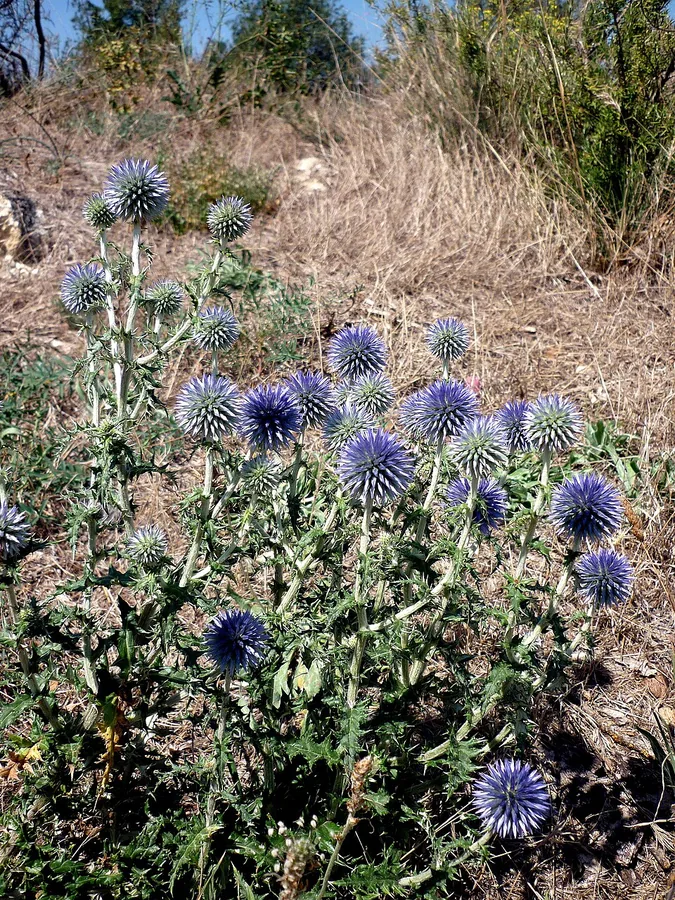
Globe thistle earns its name with the perfectly round, steel-blue flower heads it rockets up in midsummer. This hardy daisy-family perennial lives for full sun and poor, dry ground, and it powers through heat, drought, and the deer and rabbits that graze on softer plants. The spiky foliage and bristly globes hand a border a bold, architectural jolt that keeps every eye moving.
The best part is how little it demands while giving so much. Drop it into lean soil, keep the water light, and it drives down a deep taproot and takes off. The flowers pull in bees and butterflies for weeks on end, and the dried heads keep their crisp shape long after cutting, so they carry the show into arrangements too.
It really is an easy grow, with just one rule to respect: it wants things tough. Rich soil and shade turn it lanky and floppy, and too much water rots the roots. Nail the site and globe thistle keeps charging for years on almost nothing.
Care
The short version: full sun, lean and well-drained soil, and a light hand on the water. Feed it rarely, leave the deep taproot alone, and snip off the spent globes to keep the self-seeding from running away.
Light
Globe thistle craves full sun, so give it every ray you can. It will tolerate a little light shade, but stems grown out of the sun stretch and flop, so park it in the brightest spot in the bed.
Water
This drought-tough plant wants dry to medium soil once it settles in. Let the top half of the soil dry between waterings, roughly every 7 to 14 days, and always err toward too little. Overwater and you rot the roots in a hurry.
Soil
Plant it in poor to average, well-drained ground, and the leaner the better. It powers through clay, loam, sand, and shallow rocky soil at a pH of 6.0 to 6.5, but wet or rich organic soil drags it into floppy growth and rot.
Temperature
It is a cold-hardy champ, riding out winters down to -29°F (-34°C) and taking summer heat up to 90°F (32°C) without flinching. That range covers just about every temperate garden going.
Humidity
Everyday outdoor humidity keeps it happy, so there is no number to chase. Airflow does the heavy lifting over moisture in the air, since still, crowded conditions invite powdery mildew onto the leaves.
Feeding
Feed it almost never and let it fly. Globe thistle thrives in nutrient-poor soil, and rich feeding only churns out floppy, lanky growth that needs staking. A lean diet keeps the stems sturdy and shooting straight up.
Pruning
Snip off the spent globes to tidy the plant and slam the brakes on self-seeding. After bloom or in late fall, cut the stems back to the low basal foliage. Want some for drying? Cut them while they are still young.
Repotting
It rarely needs repotting and hits its stride in the ground, where the deep taproot can dive. In a container, watch for reduced vigor or roots circling the pot, the sign it has outgrown its home.
Size & spacing
Plants shoot up to 3 to 4 feet (91 to 122 cm) tall with a spread of 24 to 30 inches (61 to 76 cm). Give each one that much room so air rips through freely and the foliage stays dry.
When to plant
Globe thistle is a cold-hardy perennial that bounces back on its own every year. Kick off seed indoors in late winter, set the plants out after the last spring frost, and the steel-blue globes fire open from midsummer through September.
Northern hemisphere
Southern hemisphere
Typical months for a temperate climate: start earlier in warm zones, later where spring frosts linger.
- Sow: Late winter to early spring, 6-8 weeks before last frost
- Plant: After last spring frost
- Harvest: Mid-summer through September
Hardiness
USDA hardiness zones: 3–8
Temperature: down to -40°C
Troubleshooting
Globe thistle ranks among the most trouble-free perennials going, and nearly every problem comes down to coddling it. Keep watch for soft roots, floppy stems, or a powdery film on the leaves. Match what you spot below and tune the site before it spreads.
Sudden wilting and yellow leaves above rotted roots
A drooping, yellowing plant on something this drought-loving nearly always points straight to root rot from overwatering. Soggy ground or heavy, rich soil traps water around the roots until they go soft and brown. Dial the watering right back and let the soil dry, sharpen up the drainage or shift the plant to leaner, sunnier ground, and clear out anything that has rotted past rescue.
Fix:
- Reduce watering and allow soil to dry out
- Improve drainage or relocate to a well-drained, sunnier site
- Remove and discard severely rotted plants
Stretched-out stems flopping across the bed
Floppy stems shout for more sun or a leaner patch of ground. Globe thistle thrives when life stays tough, and a pampered plant pays you back by sprawling everywhere. Push it into full sun, cut out the feeding, and slide a stake beside the tallest stems if they keep leaning, and it snaps back upright.
Fix:
- Move to full sun
- Avoid feeding and grow in lean soil
- Stake taller stems if needed
White, flour-like dust taking over the leaves
Powdery mildew moves in fast when the air stalls around the leaves, usually in a crowded or shady patch. Open the plant right up by thinning and spacing, whip off the worst-coated leaves, and let full sun pour onto it. It never grows into more than a cosmetic blemish, so there is no need to sweat it.
Fix:
- Improve air circulation by spacing and thinning plants
- Remove affected foliage
- Site in full sun
Tiny pests bending fresh growth and gumming up leaves
Spot small insects on the fresh growth and it is almost always aphids, with the odd leaf miner, thrip, or slug and snail crashing the party. None of it slows this tough, pest-resistant plant down for long. Blast the aphids off with a jet of water, snatch up the slugs by hand, and shrug off any light nibbling.
Fix:
- Hose off aphids with water
- Hand-pick slugs and snails
- Tolerate minor damage as the plant is generally pest-resistant
Toxicity
Great news for a home with pets and kids: globe thistle is not poisonous. NC State Extension reports it as non-toxic to cats, dogs, and horses, and nothing in the plant will harm people. The only real hazard is mechanical, so wear gloves around the spiny leaves and prickly flower heads.
Safe for
People · Cats · Dogs · Horses · Rabbits · Livestock · Birds
Cats None
Nothing in the plant poisons a cat, so a curious one is in the clear. Just watch the spiky foliage, which can prick an exploring mouth or paw.
Dogs None
A dog can chew away with zero toxic fallout. The stiff, bristly leaves and flower heads are the only obstacle, and one sharp prick usually kills the curiosity fast.
Horses None
Horses stay perfectly safe, with no toxins anywhere in the picture. Most sidestep the prickly plant on their own anyway.
Rabbits None
No poison threatens a rabbit, and those spines usually send it bounding right past.
Livestock None
Grazing animals can browse close by and stay unharmed. The coarse, prickly foliage keeps most of them at a distance regardless.
Birds None
Birds are totally safe, and loads of them dive into the dried seed heads for a meal. The blooms also pull in the bees and butterflies that make this plant such a thrill to grow.
People None
It poses no poisoning risk to handle or stand near. Just pull on gloves before cutting or arranging it, since the spiny leaves and bristly globes scratch bare skin.
Wear gloves when handling; the spiny leaves and prickly globe-shaped flower heads can scratch or prick skin.
Varieties
The straight species delivers on its own, but a handful of named selections are worth chasing down for their color and size.
Veitch's Blue
A more compact winner at 3 to 3.5 feet, it fires off darker steel-blue flowers and blooms longer and freer than the species.
Platinum Blue
It grabs attention with silvery-white stems set against soft lavender-blue flower heads.
subsp. ruthenicus
This subspecies grows as a smaller globe thistle that shows off finely cut, white-woolly foliage.
Companions
Globe thistle pairs best with other sun-loving, drought-tough plants that want the same lean, dry soil and bring in the same pollinators.
Plant near
Yarrow: Shares full-sun, dry, well-drained, lean-soil conditions and supports pollinators alongside globe thistle.
Russian sage: Matches drought-tolerant, full-sun growing needs and complements the steel-blue blooms.
Sedum: Thrives in the same poor, dry, well-drained soils and sunny exposure.
How to propagate
You can crank out more globe thistle from seed, division, or root cuttings, though the deep taproot makes seed the simplest route by a mile.
SeedEasy
Sow in spring; self-seeds readily in the garden · One to two seasons to reach flowering size
Seed is the fun, easy way in. Sow in spring and the plants race through one to two seasons to reach flowering size. Leave the flower heads standing and they self-seed all over the garden.
DivisionDemanding
Spring or early fall · One season
Division works in spring or early fall, but brace yourself, since the deep taproot fights disturbance and needs about a season to settle again. Plenty of growers just leave the clump right where it is.
DivisionModerate
Spring · Several weeks to root
Root cuttings open up another spring project, slicing sections off the fleshy taproot instead of the stems. Give them several weeks and they root into brand new plants.
Myths
Globe thistle spreads like an invasive weed and poisons grazing livestock.
People mix it up with the weedy field thistles, but it is a garden perennial that NC State Extension reports as non-toxic to cats, dogs, and horses. It is an ornamental, not a noxious or poisonous plant, though it will self-seed with gusto if you let the flower heads ripen.
Globe thistle demands splitting every few years or it loses steam.
It drives down a deep taproot that turns lifting and dividing into a real battle. The plant thrives left undisturbed in place, and it skips the regular splitting so many other perennials demand.