Houseplant · Polypodiaceae
Staghorn Fern
Platycerium bifurcatum
Mount it on a board, hand it bright indirect light and a good soak, and watch the staghorn throw out antler fronds like a trophy on the wall.
Bright indirect
Every 7–14 days
55–75°F · 13–24°C
USDA 9–12
Overview
Those forked fronds that branch out like a stag's antlers are exactly why this fern is such a joy to grow. It is an epiphyte, a plant that clings to bark and branches in the wild instead of rooting in soil, so mounting it on a board is the fun, natural way to keep it. Straight from the tropics, it brings a bold, sculptural shape that turns heads.
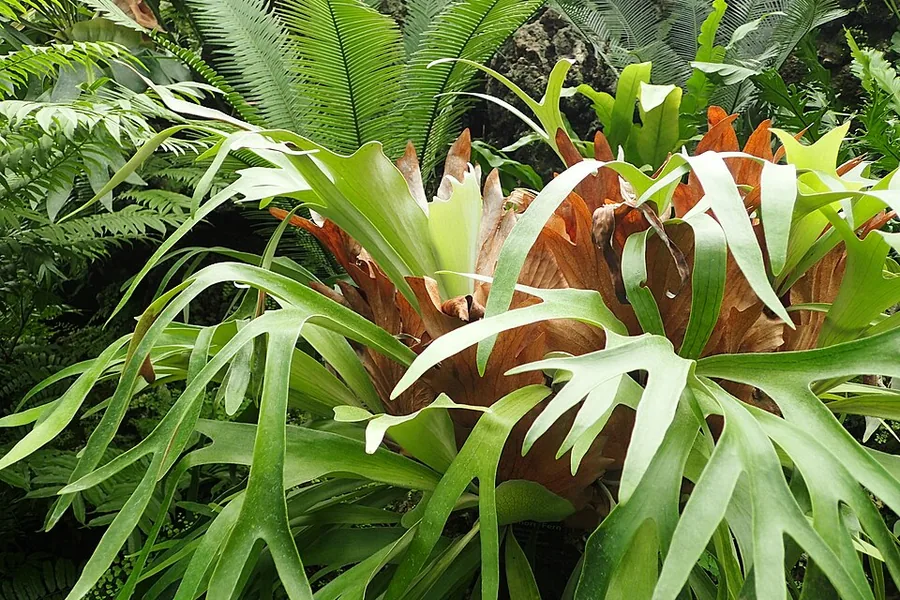
Two frond types keep this plant endlessly interesting. The green antler fronds are the forking stars that grab attention, while the flat, papery shield fronds grip the base and turn brown as they age. That browning is no problem at all, since it is the plant building a protective collar right around its roots.
It grows slowly and thrives on a solid setup rather than fuss, which suits a hands-off grower perfectly. Get the light, the mount, and the watering rhythm dialed in, and a staghorn keeps rewarding you for years, pushing out fresh antlers again and again. Few houseplants stay this satisfying to watch.
Care
The short version: bright indirect light, a good soak of the mounted root ball with a dry-down between, a warm room, and high humidity with plenty of air moving around it.
Light
Give it bright indirect light, the kind that floods a room without letting the sun strike the fronds. It shrugs off partial shade or a little soft sun, so you have got some freedom in where it goes. Keep it clear of harsh direct rays, which scorch the leaves, and dim corners, which leave it limp.
Water
Water on a 7 to 14 day rhythm and let the root ball dry a little, but never bake it dry. Soak or immerse the mounted root ball, not the fertile fronds, for a few minutes, then let it drain. Step up the watering during warm, active growth and pull way back over winter.
Soil
Forget potting soil here, since this fern wants something airier. Set it up in an epiphytic mix of sphagnum moss and orchid bark, or mount it on a board with moss packed around the roots. Keep the pH slightly acidic at 5.0 to 6.0, add sharp drainage and freely moving air, and the roots stay happy.
Temperature
Keep it in that comfortable 55°F to 75°F (13°C to 24°C) band, which most warm rooms already hit. It has zero tolerance for frost, so steer it away from cold drafts and chilly winter glass.
Humidity
This fern comes alive in humid air, ideally 50% to 80%. A bathroom or kitchen often nails it, and grouping plants or running a humidifier boosts drier rooms fast. Team that moisture with steady airflow, because stagnant damp air is what triggers black spot.
Feeding
Feed it monthly through spring and summer while it is growing, using a balanced diluted liquid fertilizer. Skip feeding in the dark months, when growth all but stops.
Pruning
Pruning takes almost no effort. Snip off only the antler fronds that have gone fully dead, brown, and shriveled. Leave the brown shield fronds at the base right where they are, because they are a living, protective part of the plant, not scraps to clear away.
Repotting
You will barely ever remount a staghorn, maybe once every few years when it truly outgrows its board. Keep an eye out for shield fronds spilling over the edges, a root ball shoving the plant off its mount, or a top-heavy shape that will not sit still. Until then, let it ride.
Size & spacing
Indoors it climbs to around 2 to 3 feet (61 to 91 cm) tall and spreads about as wide. Hang or set it where the antlers can stretch right out without bumping a wall or crowding a neighbor.
Troubleshooting
Nearly every staghorn hiccup traces straight back to watering or the air around it, and the fronds flag it fast. Catch the early signs and you can jump in and turn things around before trouble spreads. Match your symptom below and act while it counts.
Dark spots racing across the fronds
That is black spot, a fungus that pounces when humid air stalls and water lingers on the leaves. Open up the space so air can rip through, aim your water at the root ball instead of the fronds, and snip off any frond that is heavily marked. Get the air moving and it clears right up.
Fix:
- Improve air circulation around the plant
- Reduce misting and avoid wetting the fronds when watering
- Remove badly affected fronds
Antler fronds flopping with browning tips
Soft, sagging fronds nearly always mean the root ball has gone bone dry, the classic sign of underwatering once the mount feels feather-light. Plunge the root ball into water for a few minutes, drain it well, and lock back into a steadier schedule before it dries out again. It springs back fast once it drinks.
Fix:
- Immerse the root ball (not the fertile fronds) in water for several minutes
- Drain thoroughly and resume regular watering before it fully dries
Webbing, cottony fluff, or brown bumps on the fronds
Those are the tell-tale marks of spider mites, mealybugs, aphids, and scale, which pounce when dry air leaves the plant stressed. Wipe the pests off with a damp cloth, then hit them with insecticidal soap, going light on the felt-covered fronds. Pull the plant away from your others until it is totally clean.
Fix:
- Wipe pests off with a damp cloth
- Treat with insecticidal soap, avoiding heavy coating of the felt-covered fronds
- Isolate the plant until controlled
Toxicity
Here is a real win for anyone with pets or kids: the staghorn fern is non-toxic right across the board. The ASPCA gives it the all-clear for cats, dogs, and horses, and nothing in the fronds threatens people or other animals. Eat a big pile of any plant and a stomach might grumble, but that is as far as it goes here.
Safe for
People · Cats · Dogs · Horses · Rabbits · Livestock · Birds
Cats None
Cats are totally safe around this fern, since nothing in the fronds can harm a curious nibbler. A cat that eats a lot might get a quick, mild stomach upset, the same as with any houseplant.
Dogs None
Dogs can chomp a frond without any real risk, because the plant carries no toxins. Gorge on greenery and one might have a passing bout of vomiting, but nothing worse.
Horses Safe
Horses have nothing to fear from the fronds, which hold no troubling compounds. A curious taste does no harm at all.
Rabbits Safe
Rabbits can nibble the fronds freely without harm. A big helping of new greenery may loosen the gut for a day, so keep their tastes small.
Livestock Safe
Grazing animals run no risk from this fern, since it lacks the toxins that make some ornamentals a worry in a pasture or barn.
Birds Safe
Pet birds are perfectly safe near it, as the fronds hold nothing poisonous. A curious peck does no harm.
People Safe
It is safe for adults and children to handle and grow. Nobody grows it for the table, but a stray taste will not cause trouble.
No special handling needed; non-toxic if nibbled, though eating large amounts of any plant may cause mild, temporary stomach upset.
Varieties
The plain species covers most of what you will find, and one named selection keeps turning up in shops for good reason.
Platycerium bifurcatum 'Netherlands'
Keep an eye out for 'Netherlands', a compact, sturdy pick with broader, more upright forked fronds that has become the go-to staghorn for growing indoors.
How to propagate
A staghorn takes its time filling out, but once it matures it hands you one rewarding, reliable way to grow another.
Offsets & pupsModerate
Spring · Several months to about a year
The rewarding way to make more is through offsets, the little pups that shoot up from the rhizome. In spring, separate a pup carrying a few of its own roots and mount it on its own board, then hold steady, because a new plant needs several months to about a year to dig in. Spores work too, though that route runs slow and fiddly.
Myths
The papery brown shields at the base are dead, so tear them off.
Not a chance, those browning shields are alive and working hard. They clasp the root crown, trap water and fallen leaf litter, and keep the root ball from drying out. Leave them put, because ripping them away tears into the roots underneath.