Houseplant · Commelinaceae
Tradescantia 'Nanouk'
Tradescantia albiflora 'Nanouk'
Bright light, a quick pinch, and Nanouk keeps pumping out bold pink, bushy, endlessly rooting growth.
Bright indirect
50–81°F · 10–27°C
USDA 9–12
4 in · 10 cm
Overview
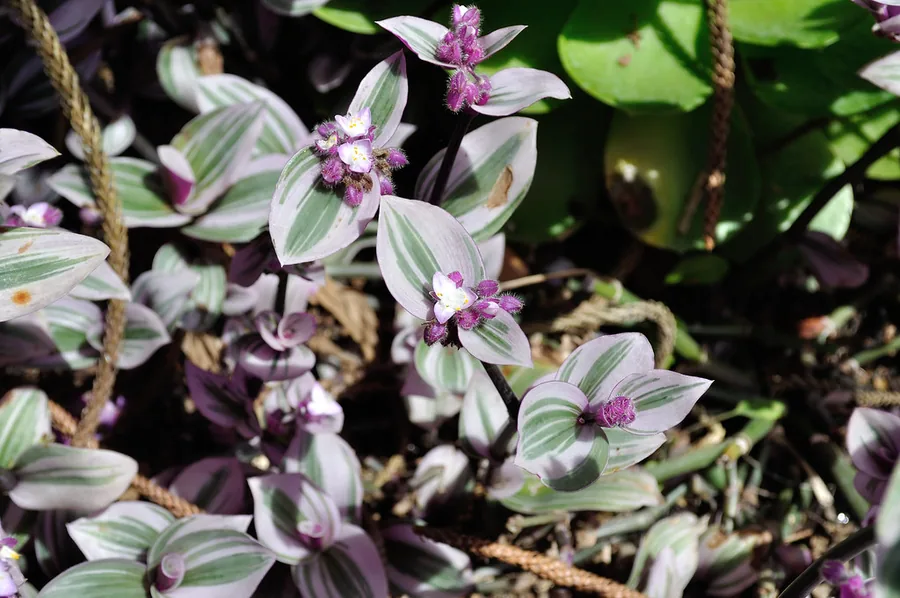
Nanouk earns its spot on any plant shelf with pure color. Its plump leaves stripe into pink, green, and cream over a purple-backed underside, and it grows into a low, packed mound instead of a long trailer. Raised in a Dutch breeding program, it took off worldwide because it fills a pot fast and keeps the color coming.
Those good looks sit on a genuinely tough plant from the Commelinaceae family, the same clan as the classic inch plant, and that toughness makes it a joy to grow. Snap off a piece and it roots, it throws out side branches on its own, and it powers back from a rough patch. Feed it one thing above all and it thrives: light, because the pink slides to plain green in a dark corner.
Run it as an indoor grower all year long. Hand it warmth, bright filtered light, and soil that drains, keep pinching, and it packs itself into a dense, rounded cushion of color. The only real way to trip up is leaving the soil soggy until the stems rot, and dodging that is easy once you get the rhythm.
Care
The short version: park it in bright, filtered light to keep the pink firing, water when the top of the soil dries and back off in winter, hold it warm in free-draining soil, and keep pinching the tips to drive bushy growth.
Light
Push Nanouk right up to a window in bright, filtered light, because that is the fuel behind its pink. Bury it in a dim corner and the color drains to green while the stems shoot out and stretch. Just keep it clear of harsh midday sun, which scorches the leaves.
Water
Water it freely while it is growing, then hold off until the top inch (3 cm) of soil dries before the next round. Dial it right back in winter as it slows. Soggy soil is the one thing that trips it up, so let the pot drain hard and never leave it sitting in water.
Soil
Plant it in a free-draining, loam-based mix or a peat-free houseplant compost. Drainage rules everything here, since those juicy stems rot in soil that stays soaked. Fold in a handful of perlite or grit to open up a heavy blend fast.
Temperature
Run it warm, anywhere in the 50°F to 81°F (10°C to 27°C) band, which is just regular room heat. It handles no frost at all, so through winter shift it clear of cold glass and drafts.
Humidity
Average household humidity keeps it cruising, and there is no target number to hit. Let the air go bone-dry, though, and the tips crisp up while spider mites move in, so a slightly humid spot keeps it charging along.
Feeding
Feed monthly with a liquid houseplant fertilizer all through spring and summer while it powers on. Cut the feeding in winter when it idles, or the unused nutrients just pile up as salt in the soil.
Pruning
Keep pinching the growing tips to fire off new branches and hold it thick, not leggy. Snap off any all-green reverted shoots the moment they show, before they sprint ahead and swallow the variegated growth.
Repotting
Hold off on repotting until it is truly rootbound, since this compact cultivar takes its time claiming a pot. The giveaways are roots shooting out the drainage holes, water blasting straight through, or growth that flat-out stalls.
Size & spacing
Nanouk stays compact, topping out near 4 inches (10 cm) tall and fanning 4 to 20 inches (10 to 50 cm) wide. That low, spreading habit makes it a knockout on a shelf, along a windowsill, or right up front in a grouped display.
Troubleshooting
Nanouk broadcasts exactly what it needs through its leaves and stems, so reading it is half the fun. Washed-out color, bare leggy stems, or soft black bases each come with a quick fix. Zero in on the match below and jump on it early, while the plant still has plenty of steam.
Mushy black stems, plant folding over
Waterlogged soil sets off root and stem rot, the one thing that truly takes this plant down. Cut the watering dead and let the soil dry, then tip it out, slice away every soft brown bit, and repot into fresh, free-draining mix. If the rot has run too far, grab a few clean tips and relaunch from those.
Fix:
- Stop watering and let the soil dry out
- Remove rotted roots and stems and repot into fresh, free-draining mix
- Take healthy tip cuttings to start a fresh plant if rot is advanced
Webbing, speckles, or white fuzz on the leaves
You have got spider mites, aphids, or mealybugs moving in. Webbing plus fine speckling flags mites, soft little clusters flag aphids, and cottony white tufts at the joints flag mealybugs. Blast and wipe them off, treat with insecticidal soap or horticultural oil, and quarantine the plant until it is spotless.
Fix:
- Rinse/wipe off pests and treat with insecticidal soap or horticultural oil
- Isolate the plant to prevent spread to other houseplants
- Repeat treatment as needed until clear
Pink dropping back to green
Chalk this up to weak light, not a sick plant. Parked too far from a window, the pink and white leaf zones cannot photosynthesize, so Nanouk falls back on green tissue and greens over. Slide it into bright, filtered light and cut off any all-green shoots fast, before they run away with the pot.
Fix:
- Move to a spot with bright, filtered/indirect light
- Avoid harsh direct midday sun, which can scorch the leaves
- Remove any fully plain green reverted shoots so variegated growth is not overtaken
Stretched-out stems going bare
Skip the pinching and legginess takes hold, and weak light piles on as the stems bolt for the window. Cut the tips back hard to fire off fresh branches and pack it out again. Hang on to the trimmings, because they root in a week and drop right back into the pot to thicken it up.
Fix:
- Pinch or cut back the growing tips to force branching and bushier growth
- Propagate the trimmed tip cuttings to fill in the pot
- Increase light if the plant is stretching
Scorched, crispy leaf edges
Blazing midday sun torches the leaves as scorch, hitting hardest on the ones pinned against the glass. Dry air and patchy watering brown the tips too. Pull it back from that direct sun into bright, filtered light, trim off the burnt leaves, and lock your watering into a steady rhythm.
Fix:
- Move out of harsh direct sun into bright filtered light
- Trim badly damaged foliage
- Keep watering consistent and maintain average humidity
Toxicity
Here is the one catch on this otherwise easy grower: it is mildly toxic. The sap irritates skin and can raise a rash on people, and a pet that chews a leaf might drool a bit or get a mildly upset stomach. None of it is dangerous, but glove up before you prune and keep leaf-chewers clear.
Toxic to
Cats · Dogs · Horses · Rabbits · Livestock · Birds · People
Cats Mild
A cat that chews the leaves might drool or turn a bit queasy, and the sap can flare up a red, itchy patch wherever it hits skin. The reaction stays minor, but keep a leaf-nibbling cat away from the plant all the same.
Dogs Mild
Dogs get the same treatment. The irritant sap can redden a muzzle or paws on contact, and a chewed stem sets off a little drooling or a quick bout of mild stomach upset.
Horses Mild
The ASPCA tags this plant as toxic to horses, with skin contact the main worry. The sap can irritate exposed skin, even though a houseplant hardly ever lands within a horse's reach.
Rabbits Caution
No rabbit-specific data is out there, so treat it as a caution instead of a snack. The same irritant sap that bothers other animals makes this one to keep clear of the hutch.
Livestock Caution
Grazing animals have not been studied closely here, and the irritant sap alone is reason enough to hold back. As a potted houseplant it rarely crosses paths with cattle, goats, or sheep anyway.
Birds Caution
There is no clear read on birds, so play it safe and keep pet birds from pecking the leaves. The sap that irritates skin could just as easily bug a curious beak.
People Caution
For people, the sap is a known skin irritant that can spark contact dermatitis, an itchy rash, on anyone handling the cut stems. Glove up when you prune or take cuttings, and wash your hands right after.
Sap can irritate skin; the RHS advises wearing gloves when handling. The toxic principle is irritant sap (contact dermatitis / mild GI irritation), NOT calcium oxalate
Helpline numbers

United States
ASPCA Animal Poison Control: (888) 426-4435 (fee applies)
Poison Control: (800) 222-1222



Canada
Poison Centres: 1-844-764-7669
Varieties
Nanouk itself is the pink stunner most growers are after, but one close relative deserves a shout.
Tradescantia 'Green Nanouk'
Keep an eye out for 'Green Nanouk', an RHS-recognized form that holds the same compact habit but swaps the show-stopping pink variegation for solid green leaves.
How to propagate
This is where Nanouk really shines, because it multiplies like almost nothing else. One tip cutting roots in days, so a single plant snowballs into a whole shelf fast.
Stem cuttingsEasy
Spring to summer · Roots in about 1 week in summer (~21°C), 2 weeks in winter (~18°C) per the plant patent
This is where Nanouk turns into a propagation machine. Snip a tip cutting in spring or summer, drop it into water or moist soil, and it roots in about a week at 70°F (21°C), or nearer two weeks in the cooler light of winter around 64°F (18°C). The stems branch freely and root at every node, so a handful of cuttings pack out a pot in no time. Just one rule: Nanouk is a patented cultivar, so propagating it to sell is off the table.
Myths
Nanouk is a totally safe plant around pets and people.
Not so fast. The ASPCA tags the inch plant as toxic to dogs, cats, and horses, and NC State and the RHS both flag the sap as a skin irritant that sparks contact dermatitis and mild stomach upset. The trouble is irritant sap, not the calcium oxalate packed into many other houseplants, so gloves knock the risk right out.
Nanouk holds its pink no matter where it sits indoors.
It will not. Drop it in a dark corner and it greens out, ditching the pink you grew it for. Light fuels that color, so bright, filtered light is what keeps the pink, green, and white blazing. Push it up to a well-lit window, just shy of harsh direct sun.