Houseplant · Nepenthaceae
Tropical Pitcher Plant
Nepenthes
Give it warmth, high humidity, and rainwater, and this carnivore builds its own insect-trapping cups.
Bright indirect
Every 2–4 days
64–84°F · 18–29°C
USDA 10–12
Overview
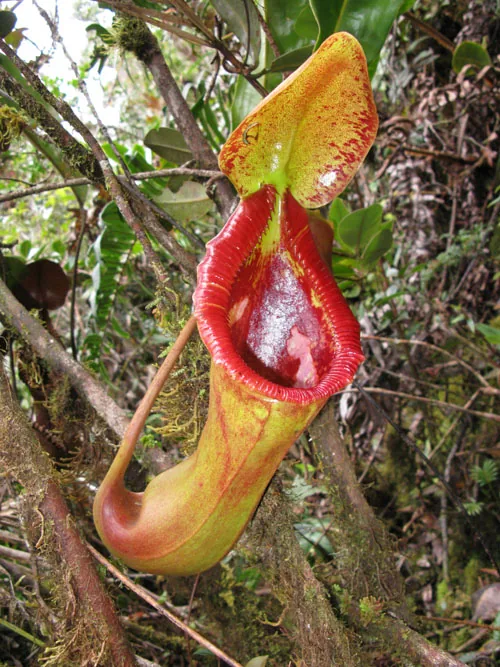
The tropical pitcher plant, or Nepenthes, is a climbing carnivore that comes racing out of the warm, humid forests of Southeast Asia and the tropics around them. Every leaf shoots into a tendril that inflates at the tip into a hanging cup, and that cup does the hunting. Insects skid off the rim, plunge into the fluid, and the plant digests them to grab the nutrients its thin soil never delivers. Watch those cups swing and you will see exactly why growers nicknamed it monkey cups.
Growing one indoors comes down to nailing the setup instead of hovering over it. Deliver bright indirect light, steady warmth, and humid air, the punch of the forest edge it hails from, and the vine climbs hard and keeps launching new cups. Let any of the three slip and the plant coasts along on plain leaves with nothing hanging off the ends.
This one is not a beginner's windowsill grab, and that is half the fun of taking it on. The real work sits in water and air rather than feeding, since the roots reject tap-water minerals and the mix has to stay open and lean. Run it like the bog plant it is and it pays you back with one of the boldest, most head-turning forms any houseplant collection can show off.
Care
The short version: bright indirect light, warmth between 64°F and 84°F, and humid air around 60% to 80%. Plant it in an airy, nutrient-poor carnivorous mix, water only with distilled or rainwater, and turn the pitchers loose to feed themselves.
Light
Serve up bright, indirect light for most of the day, the kind that pours in near an east window or a lightly shaded south one. It handles a little direct morning sun, but harsh midday rays scorch the leaves, and skimping on light is the top reason a plant slams the brakes on making cups.
Water
Keep the mix damp but never waterlogged, watering every 2 to 4 days, and leave a little fluid pooled in each cup. Stick to low-mineral water like distilled, reverse-osmosis, or rainwater, since tap-water minerals stockpile in the airy mix and torch the roots over time.
Soil
Pot it into an airy, nutrient-poor carnivorous mix of long-fiber sphagnum moss with perlite and orchid bark. Steer clear of ordinary potting soil, which loads on far more water and fertilizer than a lean-ground plant can take. Aim for a slightly acidic pH between 5.0 and 6.5.
Temperature
Warmth keeps it charging, ideally between 64°F and 84°F (18°C to 29°C). It has zero frost tolerance and sulks in a cold draft, so a snug indoor spot clear of chilly windows keeps it firing.
Humidity
This is the make-or-break lever. Hold humidity in the 60% to 80% band with a humid room, a tray, or an enclosure, since dry air is the number one reason cups never show.
Feeding
Skip root feeding completely, because the cups snag their own insects all through spring and summer. A plant tucked away from any prey will take a rare, very dilute foliar feed, and even that is more than it usually asks for.
Pruning
Clip off browned or spent cups and dead leaves right at the base to keep it sharp. Cutting back the longest, runaway vines also spurs the plant to branch and pump out fresh cups.
Repotting
Refresh it every 1 to 2 years into a clean airy mix, since old sphagnum breaks down and starts trapping water with no air. Roots busting through the drainage holes, a soggy spent mix, or smaller and fewer cups all shout that it is time.
Size & spacing
The vines charge anywhere from 1 to 6 feet (30 to 180 cm) depending on the type and how you train them, spreading around 12 to 35 inches (30 to 90 cm). Give it room to let the cups swing free instead of jamming up against a wall or the next plant over.
Troubleshooting
Nearly every hiccup with a Nepenthes comes down to water, light, or humidity long before pests ever crash the party. The plant broadcasts trouble through its cups and leaf tips, so learn those signals and jump on them early. Match what you see below and adjust fast, before a small slide gains momentum.
Cups and leaf tips crisping to brown
Crispy brown tips almost always mean mineral burn from tap water, and it stacks up fast in a mix this lean. Dry air and any fertilizer sneaking onto the roots pile on the damage. Jump to distilled, reverse-osmosis, or rainwater, run a good flush through the pot to chase out the salts, and crank the humidity up around the plant.
Fix:
- Switch to distilled, RO, or rainwater
- Flush the mix with low-mineral water to leach salts
- Increase humidity and stop any root fertilizing
Wilting fast in wet, collapsed mix
A plant flopping in a wet, packed pot is waving a flag for root rot from a mix that has choked off its air. Sphagnum breaks down and starts hoarding water with no air left, and plain potting soil pulls the same trick from day one. Pop the plant out, snip away the dark mushy roots, and replant it into fresh airy sphagnum with perlite and bark to get it charging again.
Fix:
- Repot into fresh airy sphagnum and perlite/bark mix
- Trim mushy roots
- Keep the mix damp but never waterlogged
Loads of leaves but the cups keep stalling
A Nepenthes that pumps out leaves but skips the cups is nearly always fighting dry air or weak light, and both are quick to fix. Push the humidity up into the 60% to 80% range and park the plant in strong indirect light for most of the day, and the cups kick right back into gear. Keep it warm and water with low-mineral water, and those new traps start hunting.
Fix:
- Raise humidity around the plant
- Move to a brighter spot with strong indirect light
- Maintain stable warm temperatures and keep watering with low-mineral water
Toxicity
Great news for pet owners: the tropical pitcher plant is not toxic to cats, dogs, or any other animal sharing the house. The fluid inside the cups is mild rather than dangerous, and while it is not for drinking, steering curious pets off the traps is mostly about keeping the plant in one piece.
Safe for
People · Cats · Dogs · Horses · Rabbits · Livestock · Birds
Cats None
Cats get a clean bill of health here. Let one swipe at a cup or lap a bit of fluid and nothing bad happens, though keeping the traps up high saves them from getting shredded.
Dogs None
Dogs are in the clear, with no toxic compounds to reach them. A dog that grabs a leaf or slurps a little pitcher liquid might get a quick upset stomach from the novelty, and that is the end of it.
Horses Safe
Horses face no poisoning risk at all, and this plant stays so small it never turns up anywhere near where they graze.
Rabbits Safe
Rabbits can chomp away with zero harm. There is no toxin in it, so a stray bite is totally fine, even if a rabbit barely gives it a second look.
Livestock Safe
Cattle, goats, and sheep have nothing to fear. Neither the leaves nor the trap fluid packs anything they could react to.
Birds Safe
Pet birds are perfectly safe around it. The plant will not poison them, though plot twist, a small bird is likelier to become the cup's catch than the reverse.
People Safe
People are safe too. The pitcher fluid is not for drinking, but the plant carries no poison, so handling it or a kid sneaking a taste is no real danger.
The digestive fluid in the pitchers is mild but it is sensible to keep pets from drinking it or chewing the traps.
Varieties
The genus runs to hundreds of species and hybrids, from forgiving starters to the giants collectors chase down. These are the ones most likely to cross your path first.
Nepenthes ventricosa
This highland powerhouse shrugs off everyday household conditions and throws out striking hourglass-shaped cups, which is why so many growers kick things off with it.
Nepenthes × ventrata
A rugged cross of ventricosa and alata that just keeps going, earning its spot among the easiest tropical pitcher plants to grow indoors.
Nepenthes alata
An adaptable, far-reaching species sporting slim winged cups, and it lands in more homes as a houseplant than almost any other.
Nepenthes rajah
The heavy hitter, a Borneo giant that cranks out some of the biggest cups in the genus, roomy enough to hold well over a quart of fluid.
How to propagate
Ready for more pitcher plants? Take the fast lane with cuttings or the long game from seed, whichever suits you. Both routes just want the same warm, humid conditions the parent plant already loves.
Stem cuttingsModerate
Active growth in spring to summer · 6 to 12 weeks to root in warm, humid conditions
Cuttings are the fast track to a whole batch of new plants, and they really fire up during active growth in spring and summer. Grab a vine cutting with two or three nodes, plunge it into damp sphagnum somewhere warm and humid, and watch it root over roughly 6 to 12 weeks.
SeedDemanding
Fresh seed sown any time under warm, humid conditions · Several months to germinate and a few years to reach mature size
Seed is the long haul, and it rewards the growers who stick with it. Line up fresh, viable seed and hold steady warmth and humidity, because germination alone can drag on for several months and full size is a few years out.
Myths
You have to feed pitcher plants meat or fertilizer to keep them alive.
Not a chance, since these light feeders snag their own insects right in the cups and want nothing fed to the roots. Light, humidity, and low-mineral water drive the plant far harder than any feeding ever could, while lobbing in meat scraps or houseplant fertilizer just rots the cups.
Pitcher plants need rich, fertile potting soil like other houseplants.
Forget the rich stuff, because they come from thin, hungry ground and thrive in an airy mix like long-fiber sphagnum and perlite. Regular potting soil packs in way too much fertilizer and water, and it can wipe them out.